Casting vs. Welded Fabrication for Large Machine Frames: A Buyer's Comparison Guide
Casting vs. Welded Fabrication for Large Machine Frames: A Buyer's Comparison Guide
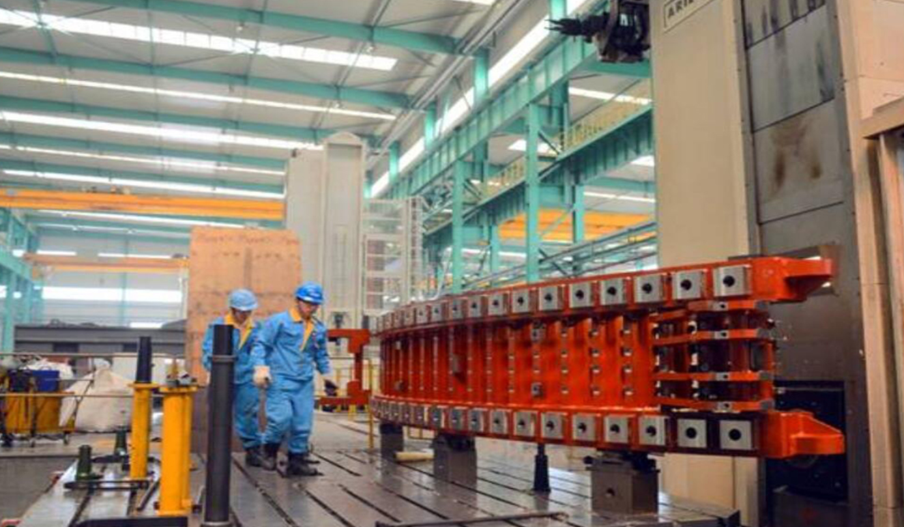
Short answer: for large machine frames, the deciding variables are the largest single section you can form, the number of identical units you expect to build, the flatness and tolerance the functional faces must hold, and how much design change is likely before the design freezes. Casting — iron, steel or aluminum — suits repeated, complex-geometry frames where a pattern can be amortised over many units. Welded fabrication suits large, low-volume or one-off frames such as welded press frames, heavy machine bases and large equipment structural frames, where the required envelope can exceed what a single casting can deliver and precision is restored after welding by machining the datum faces.
This guide compares the two routes the way a buyer actually has to decide: by size, weight, precision and customization, with the questions worth asking before you commit to either.
The Problem With Asking “Cast or Weld?”
Casting and welded fabrication are not two versions of the same process. They differ in how geometry is created, and that single difference drives tooling, lead time, allowable part size, repair strategy and sensitivity to design change. Treating them as interchangeable options is where most cost surprises start.
In practice there are three routes, not two:
- Cast route. Molten metal fills a mould that defines the shape. Openex supplies this route through partner foundries: steel and iron castings in cast steel grades such as ZG35CrMo and ZG07Cr19Ni10, and aluminum castings produced by low pressure die casting (LPDC), low pressure sand casting (LPSC) and precision investment casting in AlSi7Mg alloy.
- Welded fabrication route. Plate, tube, beam and channel are cut, formed and welded into the frame, which is then machined on its datum faces.
- Solid plate or bar route. The blank is cut from plate and machined, with no pattern and no weld in the load path.
The third route is often the one that resolves a cast-or-weld argument before it becomes expensive. The large machined platen (Custom-L-10) is a worked example: its reference configuration is a solid plate of 3,000 x 2,000 x 250 mm, roughly 11.8 t before drilling, machined to a face flatness of ≤0.10 mm per 1,000 mm and a surface finish of Ra 1.6–3.2 µm in ASTM A36 or CSA G40.21 44W steel. Nothing in that specification requires a casting, and nothing in it requires a welded assembly either.
Why Large Machine Frames Usually Go the Welded Route
Heavy equipment frames are rarely built in the thousands. A press frame, a machine base or an equipment structural frame is usually unique to a project or built in single-digit annual volumes. A casting needs a pattern, and a pattern is a fixed cost that only pays back through repetition. When repetition is low, and when the frame is larger than the largest casting the supply chain can deliver, the practical answer is to build the frame from plate and sections and weld it.
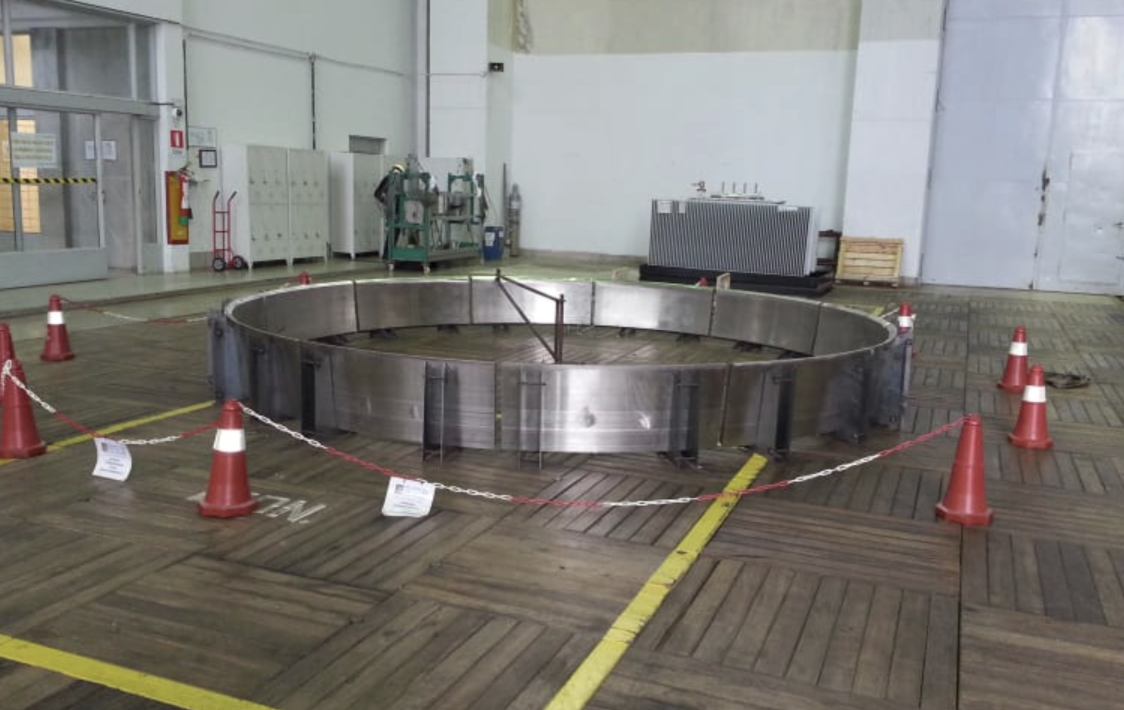
Size is the harder constraint. A casting is limited by what a specific foundry can mould, pour, cool and handle in a specific alloy. When a frame exceeds that limit, it is split into pieces and joined — and a joined heavy frame is, by definition, a welded frame. The turbine ring supplied for a hydropower station in Uruguay is the clearest illustration: the 30 t ring was fabricated as separated pieces and rough machined, then assembled for a final precision machining pass so that tight tolerance could be held on the complete ring. It has since been in stable operation for 20 years.
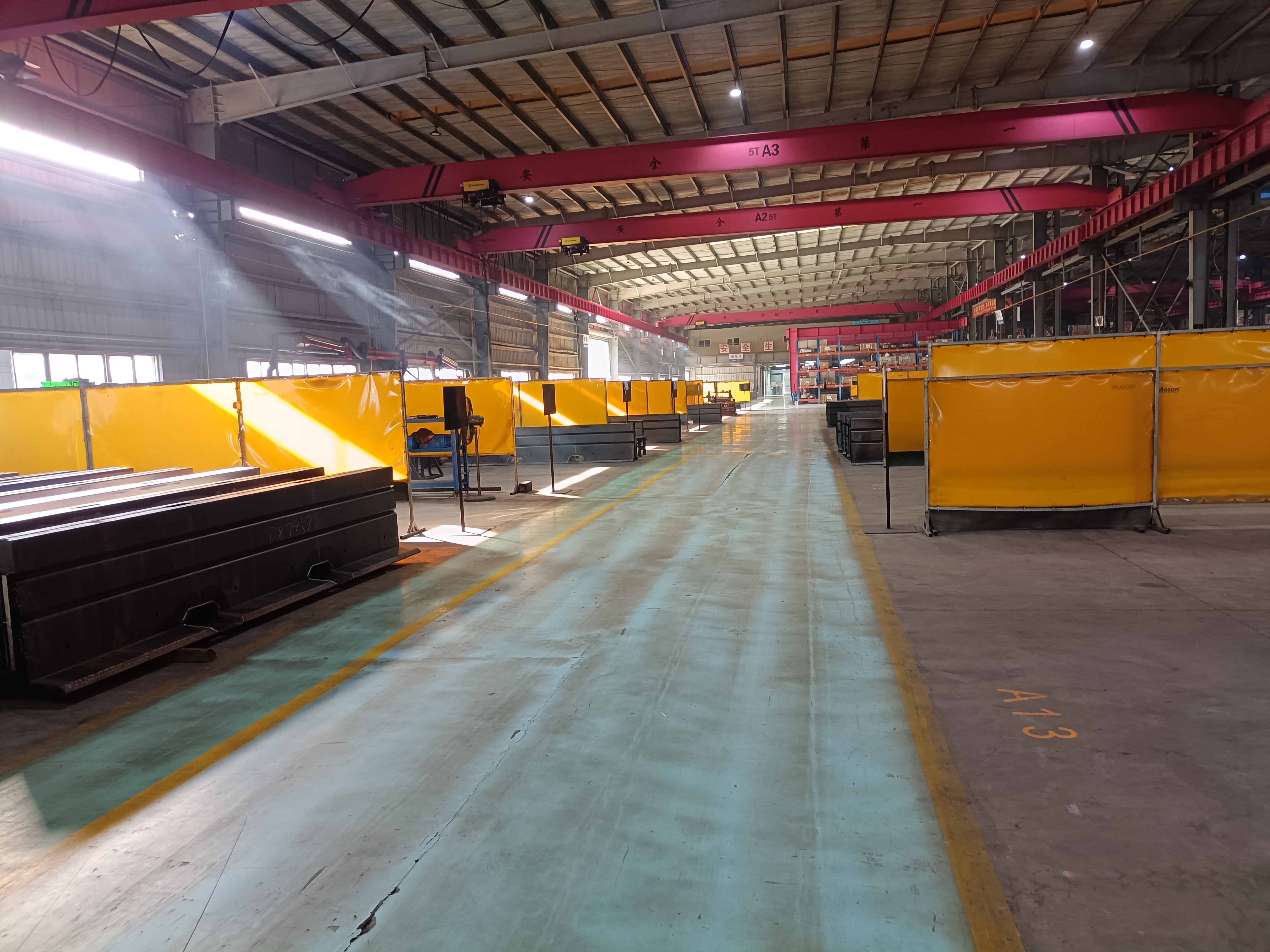
Fabrication capability therefore becomes a selection filter in its own right. Xiamen Openex Mechanical Technology Ltd is a custom metal fabrication and machining supplier based in Xiamen, Fujian, China, established in 2009, operating two manufacturing premises near Xiamen Port and Shanghai Port with a 30,000 m² footprint, around 200 employees, 35 engineers and annual output of about 20,000 tons. Its published heavy-fabrication figures include an overhead crane capacity above 250 tons, a bending capability above 18 m in length and 10,000 t, and CNC machining travel up to 50 m x 8 m x 7 m. Those numbers exist because large welded frames must be turned, flipped, machined and loaded — not merely welded.
Comparing the Routes on Size, Weight, Precision and Customization
1. Size: which route can actually deliver the part
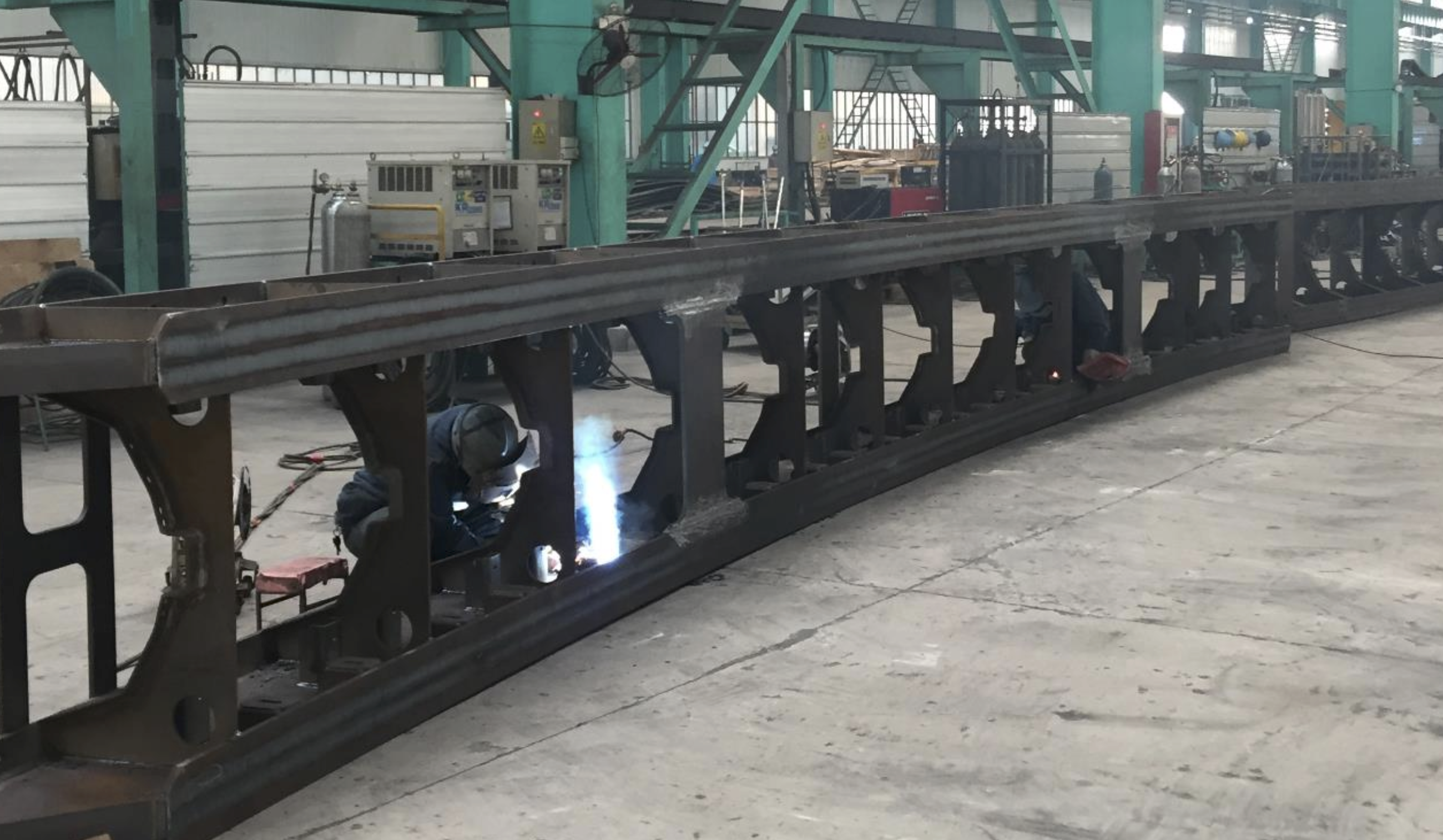
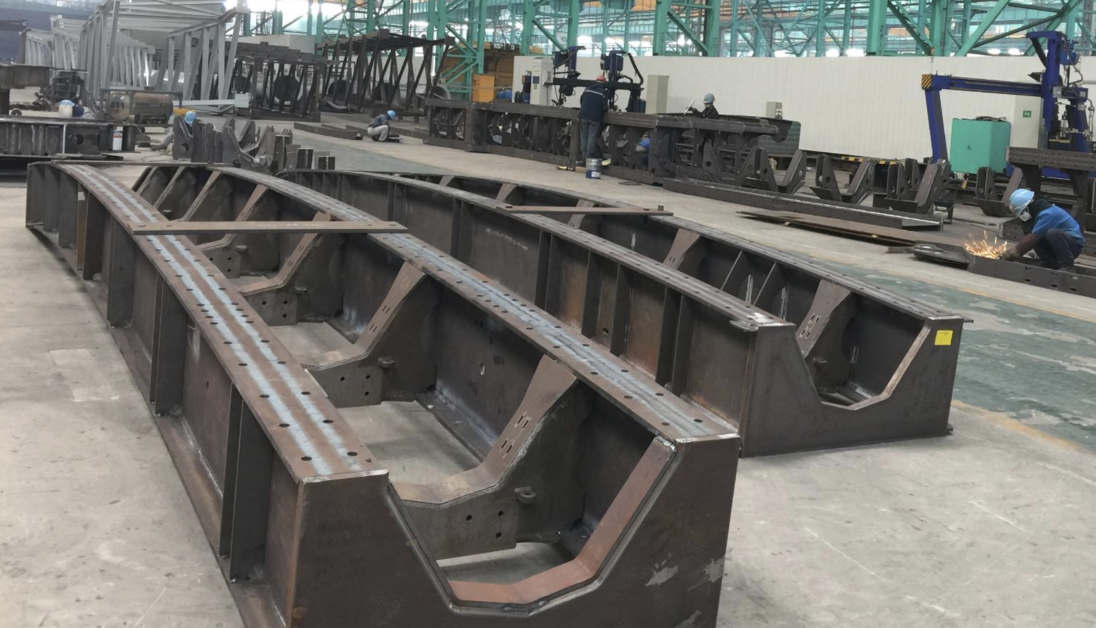
On the welded side, documented reference envelopes are concrete. A large welded press frame (Custom-L-3) is quoted at roughly 6,000 x 4,000 x 8,000 mm with main plates of 60–120 mm and an estimated mass of 80–140 t for a reference press force of 10,000–20,000 kN, subject to FEA. A large industrial weldment (Custom-L-5) is quoted with an envelope up to 6,000 x 3,000 x 2,500 mm, plate thickness of 20–80 mm and a finished mass of 15–40 t. A large welded crossbeam (Custom-L-7) runs 6,000–10,000 mm long in box sections of 800–1,200 x 600–900 mm.
On the cast side, the equivalent number is not a material property. It is the maximum size a particular foundry can mould, pour and handle in a particular alloy, and it varies from supplier to supplier and from alloy to alloy. That is a number a buyer should request in writing rather than infer from a material datasheet, and it is the reason a casting-versus-welding comparison should be re-run every time the frame grows.
Size also decides transport. The Wind Tree project for a wind power generation system shows the pattern: a 9.8 m tall welded structure in Q345 was pre-assembled to confirm manufacturing precision, then disassembled and packed for shipping, with the components designed for a 30-year duration.
2. Weight: lifting, turning and heat treatment, not just process
Welded references cover a wide mass band: heavy equipment skids (Custom-L-6) at an estimated 12–20 t, large industrial weldments at 15–40 t, and large welded press frames at 80–140 t. A welded steel machine base in the B-300 range spans base sizes from 24 x 24 in. to 72 x 96 in. with 1, 1.5 or 2 in. top plates, and is welded, stress-relieved and shot-blasted before the top is ground.
Those masses drive three practical questions. Can the fabricator lift and turn the part? Can the frame be stress-relieved after welding without exceeding the furnace? And can the machine tool reach the datum faces in one setup rather than through a sequence of re-clamped operations that adds its own error? On the cast route, the same questions reappear in a different form: can the foundry handle and clean the casting, and can the same supplier machine it, or does the part have to travel between two suppliers with a second setup?
3. Precision: where the decision usually flips
This is the point most often argued incorrectly. On both routes, final precision comes from machining, not from forming.
- On the cast route, an as-cast surface sits around Ra 6.3–12.5 µm; after machining, that same surface is specified around Ra 1.6–3.2 µm.
- On the welded route, the as-welded surface is not the delivered surface either. Documented results include a heavy machine base with ground-top flatness of ±0.001 in. cumulative, a large industrial weldment with a general machined tolerance of ±0.20 mm and datum-pad flatness of ≤0.15 mm per 1,000 mm, a large welded crossbeam with guide straightness of ≤0.10 mm per 1,000 mm, and a large machined platen with machined-face flatness of ≤0.10 mm per 1,000 mm.
So the useful question is not which process is more accurate in the abstract. It is how much distortion must be corrected, how much material must be removed to expose sound material, and whether the machine tool that can reach the face exists in the supplier's shop. On welded frames, distortion control is a designed activity rather than a hope: welding procedure specifications and qualifications (WPS, PQR, welder qualification, PWHT procedure), pre- and post-weld heat treatment, and a distortion control plan are standard deliverables on the welding side. On the cast route, dimensional quality depends on the foundry's process control and the machining that follows it.
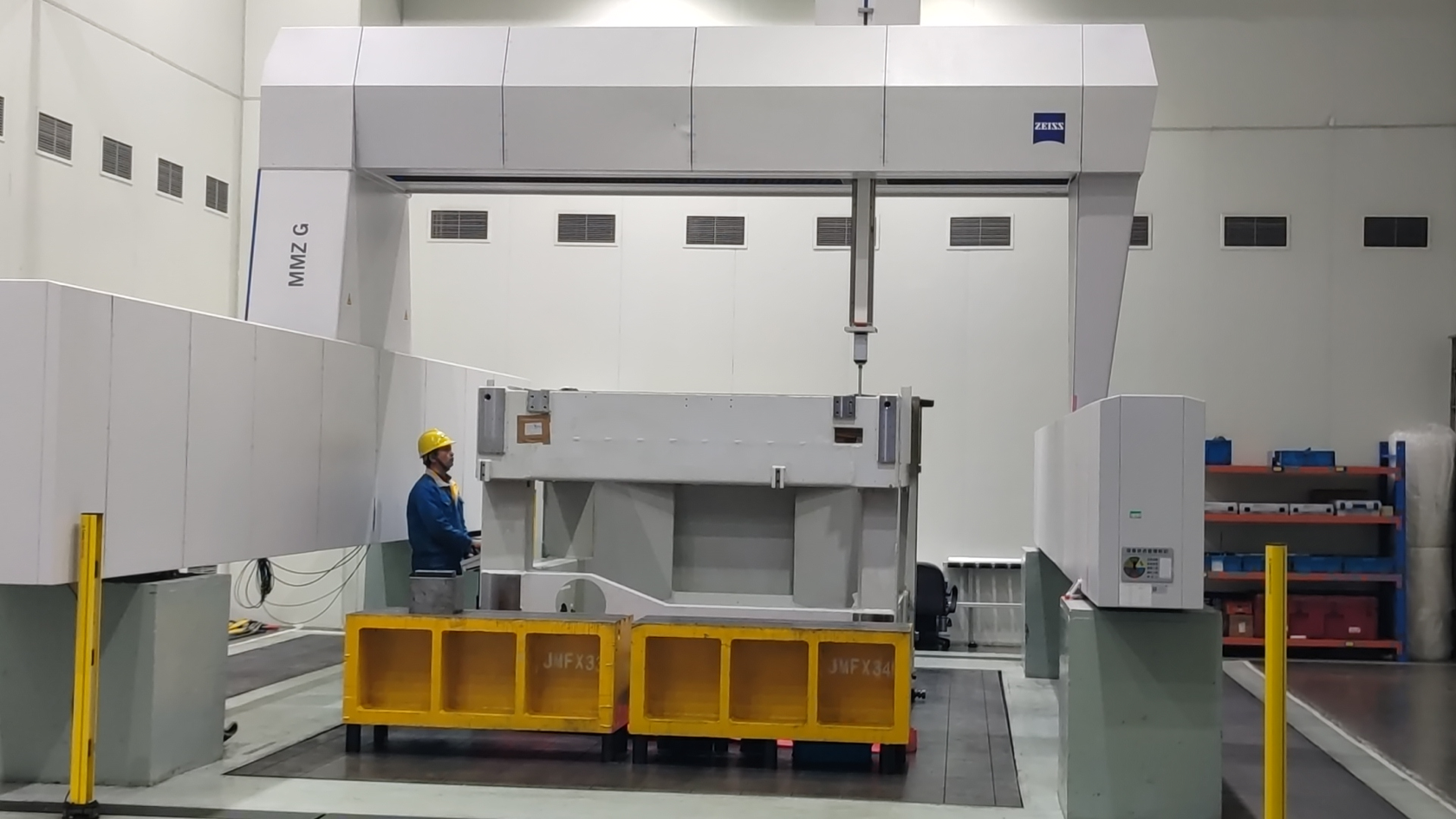
Very large flat components show how far the machined route can be pushed: heat exchanger tube sheets are quoted with a diameter up to 10,000 mm, thickness up to 600 mm, drilling depth up to 1,000 mm and drilling precision of ±0.05 mm, verified by CMM measurement together with UT, PT, MT and PMI inspection.
4. Customization and design change
Casting pays for repetition and charges for change. Once a pattern exists, geometry is largely fixed; a change after the pattern is made re-opens tooling. Welded fabrication works the other way around: geometry changes are comparatively cheap before cutting starts, because plate and tube can simply be re-cut. That does not make change free — the section, the weld design and the load path must be re-checked. Openex states plainly in its own reference notes that press force and frame dimensions require FEA and fatigue assessment, and that final section and weld design require load analysis.
Hybrid designs are common and worth considering on their own merits. In the foldable-house beam assembly produced for a modular housing manufacturer, a rolled I-beam in Q355B is welded together with cast hinges per ASTM A536, then secured with high-strength stainless pins (17-4 PH H900, Rm above 1310 MPa / 190 ksi). The casting is used where the casting shape is genuinely needed; fabricated steel is used where length, straightness and weldability matter.
What Openex Does In-House, and Where We Stop
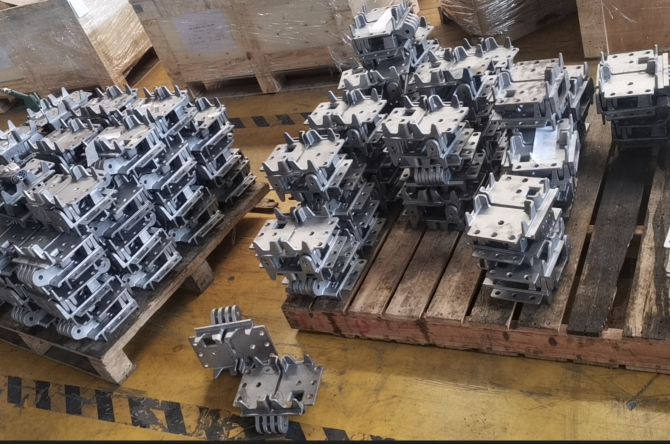
Xiamen Openex Mechanical Technology Ltd is a metal fabricator and machining supplier, not a general trading company. Roughly 80–90% of the metal parts, components and assemblies it exports are produced in its own shops, with the balance sourced from long-term partners. In-house procedures cover laser cutting, bending, machining, welding, drilling, punching, stamping, assembling and packaging. Casting, forging, hot-dip galvanizing and powder coating are handled through partner facilities.
That structure matters to this comparison, and it is worth stating without spin: if a project only requires casting, only forging, or only an anti-rust finish, with no fabrication or machining as the main job, a dedicated foundry, forge or finisher is usually the better route. Openex is a fit when fabrication and machining are the main jobs, or when a project combines forming, welding, machining and inspection under one quality system. Materials routinely handled include the carbon steel families Q235B (A36, SS400, S235JR) and Q355B (A572 Gr.50, S355JR), higher-strength grades such as Q690, wear grades such as NM450 and NM500, plus stainless SUS 304 and SUS 316L.
Step-by-Step: Choosing a Route Before You Commit
- Fix the datum before you fix the process. List the faces that carry a tolerance and write them as flatness, straightness or coplanarity per 1,000 mm. Without that list, the routes cannot be compared on equal terms. Useful reference points from delivered work include ≤0.10 mm per 1,000 mm on a machined platen face, ≤0.15 mm per 1,000 mm on weldment datum pads, and ≤0.10 mm per 1,000 mm guide straightness on a welded crossbeam.
- Size the largest single section. If the frozen design contains a section larger than the foundry can produce, the route is a split-and-weld design or a machined-from-plate design. Decide this before comparing prices.
- Count units and estimate the change rate. Casting rewards repetition; welded fabrication rewards low volume and late design change.
- Check the whole weight chain. Confirm the maximum part mass the supplier can lift, turn, stress-relieve and machine. Documented welded frames in this range include 80–140 t press frames and 15–40 t weldments.
- Decide the machining sequence. Weld-then-machine in a single setup is preferred where machine travel allows; otherwise plan a split, separate rough machining, assembly and a final precision pass — the method used on the Uruguay turbine ring.
- Define the welding and heat-treatment package. WPS, PQR, welder qualification, PWHT procedure and a distortion control plan should be named deliverables, not options.
- Agree the inspection plan. Available non-destructive methods include RT, UT, MT, PT, VT and LT; destructive scope can include chemical analysis, tensile, impact, bend and hardness testing, salt-spray corrosion testing and residual stress analysis, with dimensional work carried out on CMM equipment.
- Specify the delivered surface and protection. As-cast Ra 6.3–12.5 µm and machined Ra 1.6–3.2 µm are different products; so are shot-blasted, primed, painted, powder-coated and hot-dip galvanized finishes.
- Plan transport and site assembly. Pre-assembly, disassembly and packing — as done for the Wind Tree structure — should be planned at quotation stage, not after fabrication is complete.
Use Cases: Where Each Route Wins in Practice
Hydropower turbine ring (Uruguay, 30 t — welded-and-machined route). The ring was produced as separated pieces, rough machined, then assembled for final precision machining so that tolerance could be held on the complete assembly. The recorded result is 20 years of stable operation, very satisfactory to the customer. When a ring-shaped frame exceeds practical casting or handling limits, this split-and-finish method is what makes the tolerance achievable at all.
Large machined platen (Custom-L-10 — solid plate route). 3,000 x 2,000 x 250 mm, approximately 11.8 t before drilling, machined-face flatness ≤0.10 mm per 1,000 mm, surface finish Ra 1.6–3.2 µm, used for injection molding presses, compression molding presses and industrial presses. Where solid plate is available in the required section, this is often the shortest path to a flat, stable working surface.
Large welded press frame (Custom-L-3 — welded route). Reference press force 10,000–20,000 kN, clear opening approximately 2,500 x 1,800 mm, envelope approximately 6,000 x 4,000 x 8,000 mm, estimated mass 80–140 t, subject to FEA and fatigue assessment. This is the classic case where the envelope exceeds what a single casting can practically deliver and where the functional faces must be machined after welding.
Heavy machine base (B-300 and the 45-unit machinery base project in China — welded route). B-300 bases are welded, stress-relieved and shot-blasted, with ground-top flatness of ±0.001 in. cumulative. In the separate 45-unit project for a machinery manufacturer in China, the recorded highlights were large machining after fabrication plus assembly and testing before shipment, with two years of stable operation.
Cone crusher frame and components (cast route). Crusher frames and structural components are produced in high-strength cast steel and high-manganese steel, with dimensional inspection, NDT and welding inspection as standard. Where geometry is compact, complex and repeated, and where cast wear properties are required, casting remains the natural choice.
Energy storage steel frames and boxes (production welded route). A global deployment of 3,000 units of energy storage steel frames and boxes, with each shelf unit around 1.1 x 1.1 x 2.2 m and about 1,000 kg, powder coated for anti-rust protection. Here the welded route wins on repeatability, coating and container-friendly packing rather than on part size.
Casting vs. Welded Fabrication: Side-by-Side Comparison
| Decision factor | Cast route (iron, steel, aluminum) | Welded fabrication route |
|---|---|---|
| Typical best fit | Compact, complex geometry in repeated quantities, where cast material properties such as high-manganese wear resistance are required | Large frames in low or single-unit volumes: welded press frames, heavy machine bases, equipment structural frames |
| Tooling | Pattern or mould required; geometry change after the pattern is made typically re-opens tooling | Drawings and fixtures only; no pattern investment |
| Documented size capability | Set by the foundry's moulding, pouring and handling limit — confirm per foundry and per alloy | Press frame approx. 6,000 x 4,000 x 8,000 mm; industrial weldment up to 6,000 x 3,000 x 2,500 mm; crossbeam 6,000–10,000 mm long |
| Documented mass range | Not specified in Openex data for cast frames (supplied via partner foundries) | 80–140 t press frame; 15–40 t weldment; 12–20 t equipment skid |
| Material options | Cast steel ZG35CrMo, ZG07Cr19Ni10; high-strength cast steel and high-manganese steel; AlSi7Mg aluminum | A36, A572 Gr.50, S355J2+N, Q355B, Q690, NM450 / NM500; SUS 304 and SUS 316L |
| Surface as formed | Ra 6.3–12.5 µm as cast | As-welded surface is not a functional surface; machining is required on datum faces |
| After machining | Ra 1.6–3.2 µm on machined surfaces | ≤0.10 mm/1,000 mm face flatness (platen); ±0.001 in. cumulative ground top (B-300 base); ≤0.15 mm/1,000 mm datum pads (weldment); ≤0.10 mm/1,000 mm guide straightness (crossbeam) |
| Distortion and stress control | Managed through casting design and foundry practice — confirm the foundry's plan per project | Designed in: WPS, PQR, welder qualification, PWHT procedure, distortion control plan, stress relief and shot blasting |
| Design change before production | New or modified pattern if geometry has changed | Re-cut plate and tube; re-check section, weld design and load path (FEA) |
| Inspection options | As-cast finish and dimensional check after machining; foundry NDT scope to be confirmed per supplier | CMM measurement, UT, PT, MT, PMI; RT / UT / MT / PT / VT / LT; chemical analysis, tensile, impact, bend, hardness and salt-spray testing |
| Indicative lead time | Via partner foundry — confirm per project | Approximately 30–45 days typical for the welding fabrication and machining stages |
All figures above are documented reference configurations from Openex product, capability and case data. Configurations marked as typical reference configurations, or noted as subject to FEA, require project-specific engineering review before they are used as a design basis.
Questions to Ask Before You Commit
- What is the largest single section you can produce, and what is the maximum part mass you can lift, turn, stress-relieve and machine?
- Which faces carry the datum, and what flatness, parallelism or coplanarity per 1,000 mm do they need?
- Can the frame be machined after welding, or must it be split, roughed, assembled and finish machined in pieces?
- Which welding quality standard applies, and are you certified to it — certificate number, issuing body and scope?
- What is the heat-treatment plan (stress relief or PWHT), and is it carried out in-house or subcontracted?
- Which NDT methods apply (RT, UT, MT, PT, VT, LT), and at what coverage?
- Which processes are in-house and which are subcontracted — casting, forging, hot-dip galvanizing, powder coating?
- What happens to the pattern or fixture if the design changes after approval?
- Which drawing formats do you need, and is a full 2D plus 3D set available for the fastest quotation?
- How will the finished frame be protected, packed and split for shipping?
Frequently Asked Questions
1. What welding certification should I verify on a supplier of large welded frames?
For fusion welding of metallic material, EN ISO 3834-2 is the relevant quality requirement. Openex holds ISO 3834-2 certification, certificate number 23/999-3834, issued by SGS, covering fusion welding of metallic material under welding processes 135 and 135-Auto for material groups 1.1 and 1.2. This sits alongside an ISO 9001:2015 certificate (11426Q01049R001) whose scope is the manufacture of machined parts, metal structures and sheet metal components, plus ISO 14001:2015 and ISO 45001:2018 certificates covering the same manufacturing scope. Ask for the certificate number, the issuing body and the scope statement — not just a logo on a website.
2. How large a machine frame or weldment can actually be fabricated and machined?
Documented reference configurations include a large welded press frame of roughly 6,000 x 4,000 x 8,000 mm with an estimated mass of 80–140 t (subject to FEA), a large industrial weldment with an envelope up to 6,000 x 3,000 x 2,500 mm, and a large welded crossbeam 6,000–10,000 mm long. Supporting capacity includes overhead crane tonnage above 250 tons, bending capability above 18 m in length and 10,000 t, and CNC machining travel up to 50 m x 8 m x 7 m. In practice the binding limit is whichever of lifting, stress relief, machining travel or transport is smallest for your specific frame, so confirm that whole chain rather than the welding size alone.
3. Do you supply castings as well as welded fabrications?
Yes, but through partner foundries rather than in-house. In-house procedures cover laser cutting, bending, machining, welding, drilling, punching, stamping, assembling and packaging; casting, forging, hot-dip galvanizing and powder coating are supplied by long-term partners. Aluminum castings are produced by low pressure die casting, low pressure sand casting and precision investment casting in AlSi7Mg alloy, while steel castings use grades such as ZG35CrMo and ZG07Cr19Ni10. If a project only needs casting, only forging, or only a finishing operation with no significant fabrication or machining, a specialist in that process is usually the better fit.
4. Can I validate the design before committing to a full frame?
Prototype development and reverse engineering are offered, and production is make-to-order, so a first-off or a partial assembly can be used to verify the chosen route before the full frame is released. Send drawings in STEP, IGES, DWG, DXF or PDF. A 2D drawing alone is usually enough to quote simple components, but a 2D plus 3D set normally produces the fastest and most accurate quotation, because tolerance, welding requirements, surface roughness, material grade, heat treatment and finish requirements are usually carried on the 2D drawing while the 3D model resolves geometry. In some cases a physical sample also helps.
5. What lead time and order size should I plan for?
Current capability data lists lead times of roughly 30–45 days for the welding fabrication and machining stages, with monthly welding capacity of 5,000 tons and inspection following a 100% test standard. On order size, cost works in your favour as volume grows: full container loads beat less-than-container loads on freight, overhead spreads across more units, and larger material purchases improve material price. Small, low-value parts in small quantities are generally not an economic fit for an overseas fabrication order.
Conclusion
For large machine frames, casting and welded fabrication are not competing versions of the same answer — they are answers to different questions. Casting is the preferred route when geometry is compact and complex, when units repeat enough to amortise a pattern, and when cast material properties such as high-manganese wear resistance are part of the requirement. Welded fabrication is the preferred route when the envelope is large, volumes are low or single-unit, and the design may still move: the frame can be built from plate and sections, then machined after welding to bring the datum faces back to tolerance.
When the decision is genuinely unclear, look for the third route first. A part such as the large machined platen needs neither a pattern nor a weld, and a part such as the 30 t turbine ring needs a split-and-finish sequence that neither a single casting nor a simple weldment could deliver on its own. The frame that gets built correctly is usually the one where size, weight, precision and change rate were each written down and answered before the order was placed.
Next step: get a route recommendation on your frame
Send your drawing set (2D plus 3D where available), the datum list and the expected unit volume to the Openex team. You will get a straight answer on whether your frame is better cast, welded and machined, or cut from plate — including the cases where another type of supplier is the better fit.
Email: sales2@openex.com.cn | Tel / WhatsApp: +86 150 6078 7506 | Contact: Luna | Website: www.cncmetalworking.com
Download the Openex mechanical drawing catalogue (PDF) for typical large-frame, base and precision component builds. WhatsApp: start a conversation.
Have Questions or Need More Details?
Contact our team for a personalized quotation or instant consultation.
Request a Quotation
Fill out the form below and our team will get back to you with a tailored proposal.
WhatsApp Direct Chat
Prefer to chat in real-time? Message us on WhatsApp for instant assistance & quick answers.
- Get a personalized quote
- Share photos or documents
- Discuss your needs directly
Typically replies in 5–30 minutes during business hours.