ISO 9001 Certified Metal Fabrication: A Buyer's Checklist
ISO 9001 Certified Metal Fabrication: A Buyer's Checklist
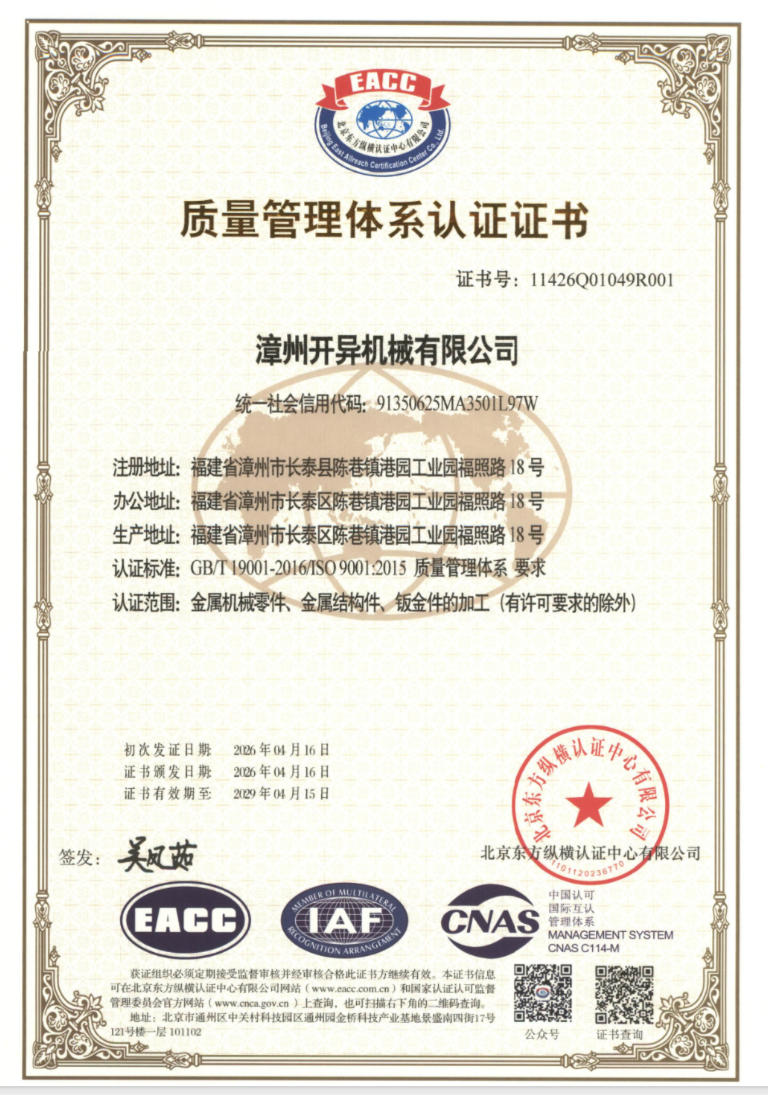
An ISO 9001 certificate is a management-system certificate with a scope line. It confirms that a fabricator documents and controls its processes for a defined set of manufacturing activities. It does not confirm welding competence, pressure-retaining capability, inspection competence, or the physical size of parts a shop can actually build. Buyers who compare certificate logos instead of scope lines usually discover the difference after the purchase order has been placed.
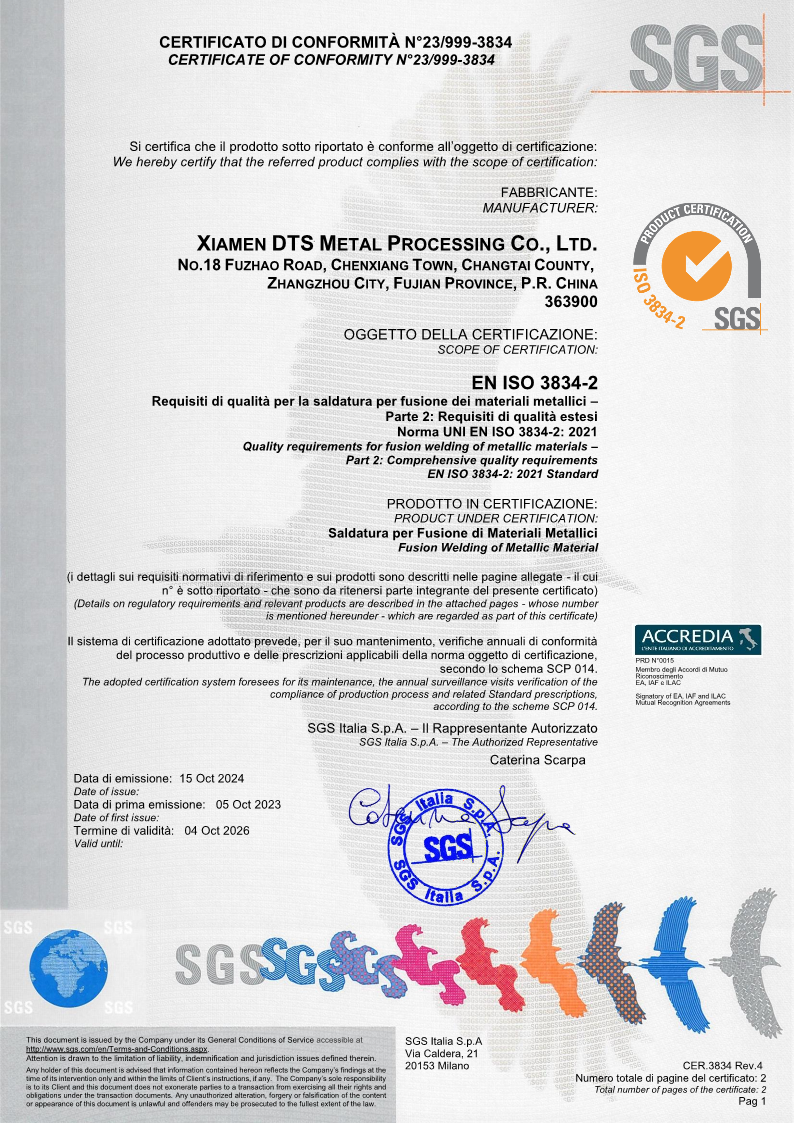
Xiamen Openex Mechanical Technology Ltd (Openex) is a custom metal fabricator founded in 2009, working from two manufacturing premises — one near Xiamen Port in Fujian and one near Shanghai Port in Jiangsu. The company holds ISO 9001:2015 certificate 11426Q01049R001, ISO 14001:2015 certificate 11426E00739R001 and ISO 45001:2018 certificate 11426S00656R001, all issued by Beijing East Allreach Certification Center Co., Ltd. and all valid from 2026-04-16 to 2029-04-15. Welding quality is qualified separately through EN ISO 3834-2 certification issued by SGS under certificate 23/999-3834, valid until 2026-10-04.
This guide explains what those documents actually cover, how a buyer should verify them, and where the boundary between certification and physical fabrication capability sits.
Problem Definition: Why "ISO 9001 Certified" Is an Incomplete Filter
Three failure patterns appear repeatedly when procurement teams screen metal fabrication suppliers. Each one can be avoided with a single extra question.
- Reading the badge instead of the scope. The certificate number, issuing body, standard revision and validity window all matter, but the scope line decides whether your part sits inside or outside the certified activity. A scope covering "manufacture of machined parts, metal structures and sheet metal components" is a strong fit for welded frames, skids and structural assemblies. The same certificate would say almost nothing useful about a program that is 100% die casting or forging.
- Mixing certificate families. ISO 9001, ISO 14001 and ISO 45001 are management-system certificates. EN ISO 3834 defines welding quality requirements. ASME codes address pressure-retaining construction. NDT methods such as RT, UT, MT, PT, TOFD and phased array are inspection techniques with their own personnel qualification requirements. Treating one as a substitute for another creates gaps that only surface at final inspection.
- Ignoring physical capability. No certificate adds crane tonnage, machining stroke, plate-rolling diameter or heat-treatment capacity. A well-documented quality system does not help if the shop cannot lift, machine, weld or ship the part you designed.
Buyer takeaway. When shortlisting ISO 9001 certified metal fabrication manufacturers, request three things in the first email: the certificate PDF itself (to read the scope line), the certificate number plus validity dates (to verify independently), and a part-specific quality plan (to test whether the system reaches your drawing).
Industry Background: How Certification Became a Sourcing Gate
Over the past decade, certification moved from a marketing differentiator to a procurement gate. Project owners in energy, mining, oil and gas, petrochemical, power generation and heavy machinery now attach vendor document requirements to the inquiry itself, and technical evaluation often stops before price is discussed if those documents are missing.
Two shifts drive this. First, quality is no longer evaluated alone. Environmental management and occupational health and safety evidence are routinely requested alongside a quality certificate, which is why manufacturers increasingly hold ISO 9001, ISO 14001 and ISO 45001 under a single integrated scope. Second, welding has been separated from general quality management. European and international buyers commonly use ISO 9001 for the management system and EN ISO 3834 for welding quality requirements, because ISO 9001 itself does not define welding-specific controls such as procedure qualification, welder qualification, consumable control or distortion control.
The practical consequence is straightforward: a fabricator holding only a management-system certificate, without welding-specific certification, without a documented NDT route, and without pressure-retaining code experience, will be filtered out at the technical stage of most industrial tenders.
Detailed Solution: What Openex Is Certified For, and What Each Document Covers
Openex's certification set is deliberately layered: a management-system layer, a welding-qualification layer, and a part-specific documentation layer. The table below reproduces the certificate register as issued.
| Certification | Standard | Certificate No. | Issuer | Validity | Scope |
|---|---|---|---|---|---|
| ISO 9001 | GB/T 19001-2016 / ISO 9001:2015 | 11426Q01049R001 | Beijing East Allreach Certification Center Co., Ltd. | 2026-04-16 to 2029-04-15 | Manufacture of Machined Parts, Metal Structures and Sheet Metal Components (except where a license is required) |
| ISO 14001 | GB/T 24001-2016 / ISO 14001:2015 | 11426E00739R001 | Beijing East Allreach Certification Center Co., Ltd. | 2026-04-16 to 2029-04-15 | Manufacture of Machined Parts, Metal Structures and Sheet Metal Components (except where a license is required) |
| ISO 45001 | GB/T 45001-2020 / ISO 45001:2018 | 11426S00656R001 | Beijing East Allreach Certification Center Co., Ltd. | 2026-04-16 to 2029-04-15 | Manufacture of Machined Parts, Metal Structures and Sheet Metal Components (except where a license is required) |
| EN ISO 3834-2 | EN ISO 3834-2 | 23/999-3834 | SGS | Valid until 2026-10-04 | Fusion welding of metallic material (welding process 135, 135-Auto; material groups 1.1, 1.2) |
Management-system layer: ISO 9001, ISO 14001, ISO 45001
All three certificates share one scope wording: manufacture of machined parts, metal structures and sheet metal components, except where a license is required. That wording is important for buyers, because it tells you which activities the audit covered. If a purchase is dominated by metal structure fabrication, welded assemblies, machined parts or sheet metal components, the scope is a direct match. If a purchase is dominated by casting or forging with no fabrication or machining content, the same certificate is not the right evidence, and a direct casting or forging supplier is the more appropriate route.
Welding-qualification layer: EN ISO 3834-2
Openex holds EN ISO 3834-2 certification issued by SGS under certificate 23/999-3834, valid until 2026-10-04. The certified scope is fusion welding of metallic material under welding process 135 and 135-Auto, for material groups 1.1 and 1.2. Process 135 is metal active gas welding and 135-Auto is its automated form, while material groups 1.1 and 1.2 correspond to the carbon and carbon-manganese steel families.
That precision cuts both ways, and a competent fabricator should say so plainly. EN ISO 3834-2 covers welding quality requirements within the certified process and material range. Work outside that range — for example stainless or duplex welding, or submerged arc welding — is still producible, but the qualification route should be agreed in the purchase order through welding procedure specifications, procedure qualification records, welder qualification and the applicable inspection method. Openex operates SMAW, GMAW/MIG, GTAW/TIG, SAW, automatic tube-to-tubesheet welding, deep penetration welding and robotic welding, with WPS, PQR, welder qualification and post-weld heat treatment procedures available, so the discussion is about which procedure is qualified for your joint, not whether welding is possible.
Part-specific layer: pressure-retaining work and inspection records
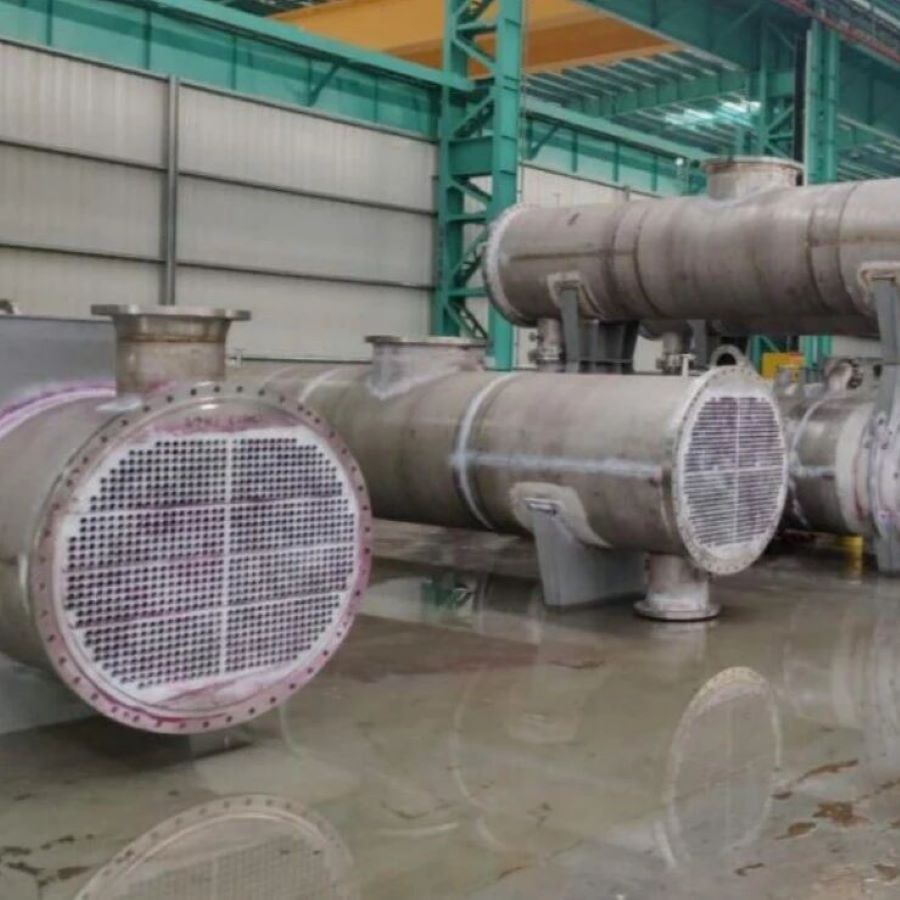
For pressure-containing items, ASME-certified fabrication is used for heat exchanger cores, storage containers, feed surge drums, crystallization reactors and pipeline prefabrication. A storage container fabricated from Q345R + S31603 clad plates goes through dissimilar-material welding including explosion-bonded clad plates, full in-house NDT with TOFD, phased array, RT, UT and MT, and pressure testing.
Tube sheets illustrate the same principle at the part level. The Customized-J-01 tube sheet line covers diameters up to 10,000 mm, thicknesses up to 600 mm and drilling depths up to 1,000 mm, with a drilling precision of plus or minus 0.05 mm and a quality assurance route that includes CMM measurement, UT, PT, MT and PMI inspection.
Inspection and test evidence behind the certificate
The certificate is only as useful as the test evidence that flows from it. Openex's documented inspection menu includes non-destructive testing with RT, UT, MT, PT, VT and LT; destructive testing with chemical analysis of element composition, mechanical testing covering tensile strength, yield, elongation, impact toughness including low-temperature impact, bend and hardness; corrosion testing by salt spray; and dimensional and visual inspection covering length, diameter, angle, roundness, straightness and position measurements along with surface roughness parameters such as Ra and Rz. Specialised checks include residual stress analysis and coating or plating inspection.
Two physical assets support that menu. The first is a large Zeiss CMM with a 7 x 4 x 3 m capacity and micron-level precision, supported by smaller CMMs for routine work. The second is a set of purpose-developed visual inspection machines that allow small metal parts produced in high volumes to be checked 100%, which removes the fatigue factor that affects manual inspection of large quantities.
Capability envelope: where certification meets the shop floor
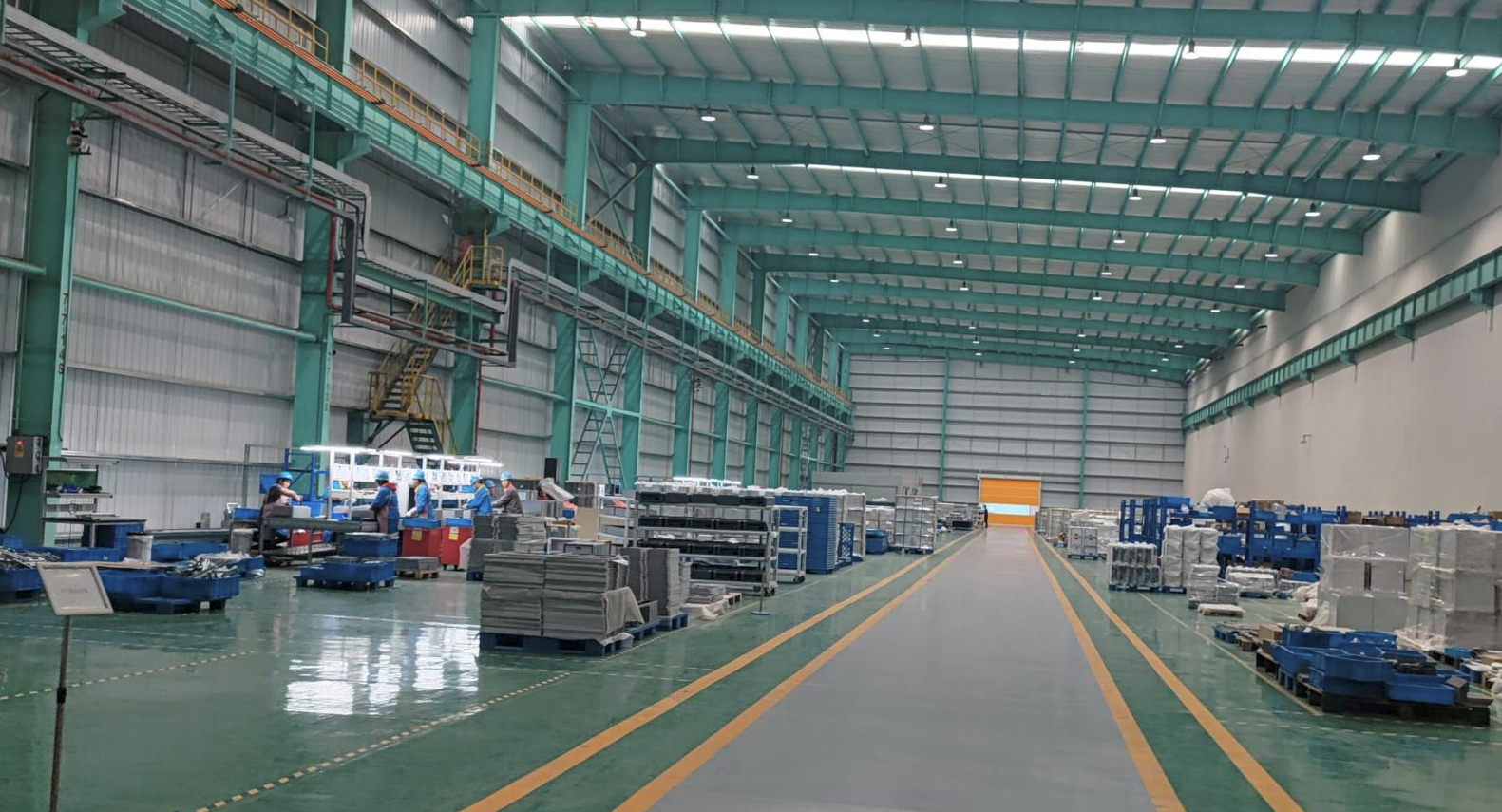
Openex operates approximately 30,000 square metres of manufacturing space with around 200 employees, including a 35-engineer technical team, and reports annual output of about 20,000 tons, with roughly 80% of production exported to the EU, USA, Australia, New Zealand, Japan, Singapore, South America and the Middle East.
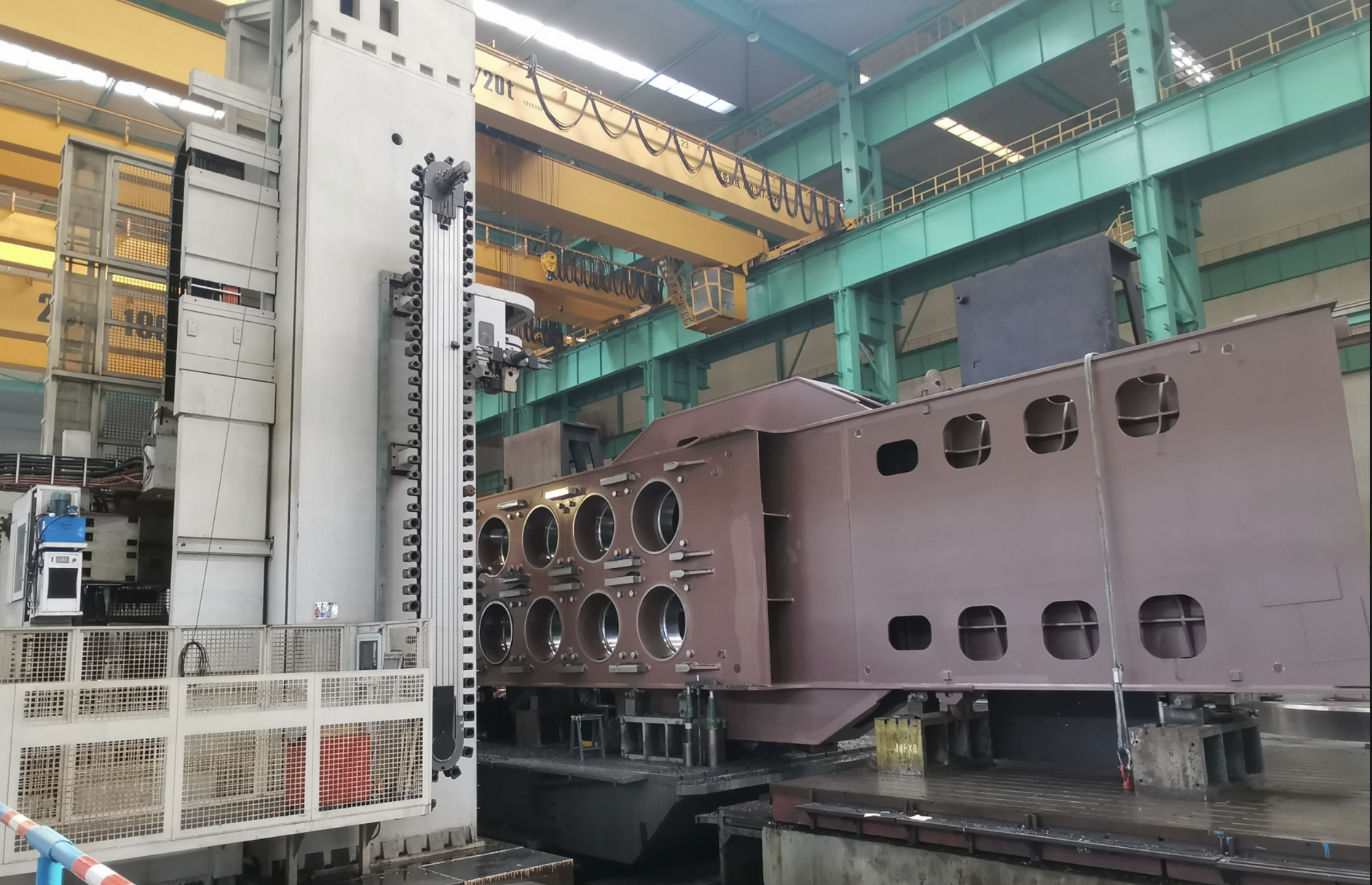
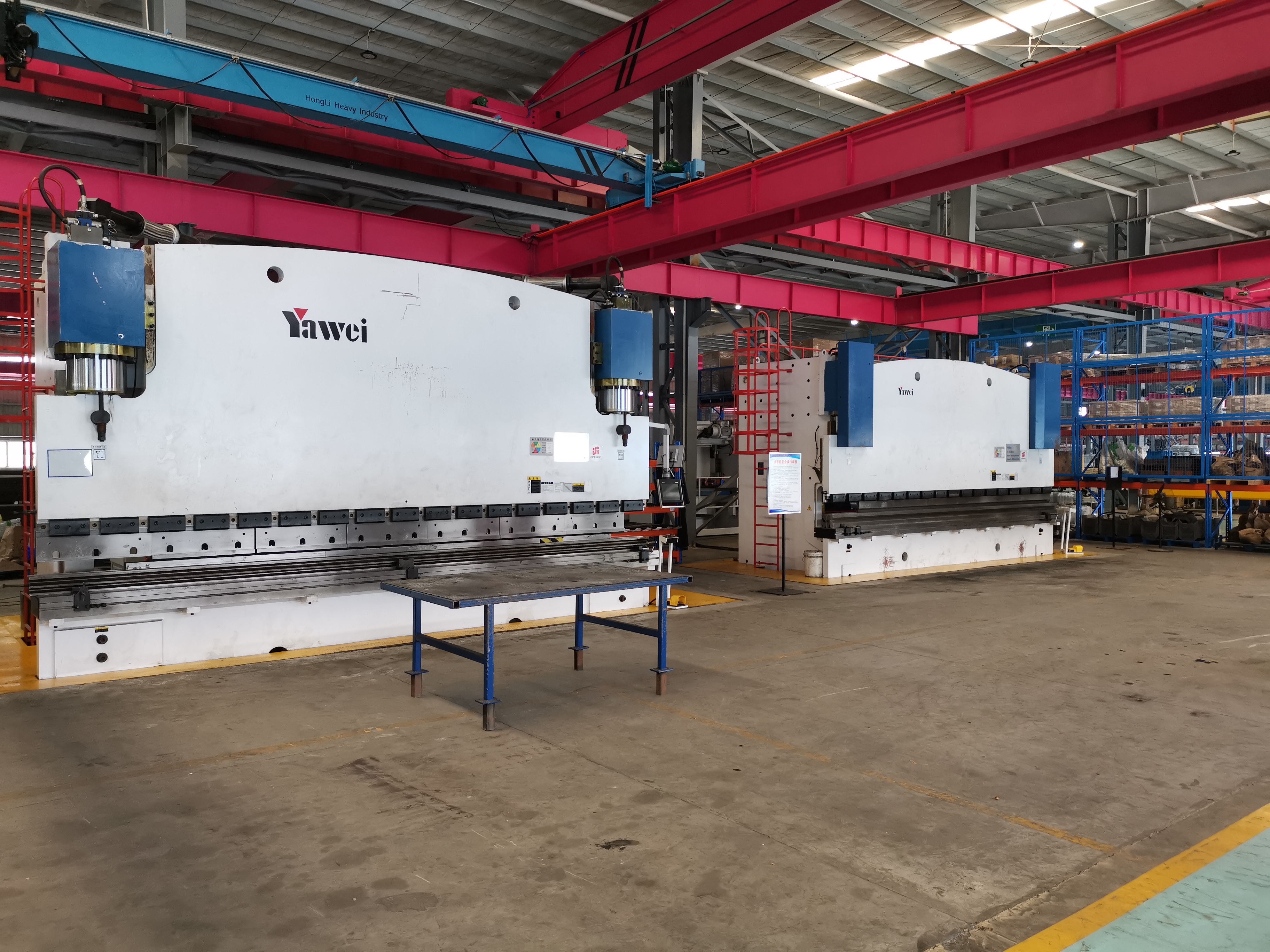
The installed heavy equipment defines the practical envelope. Overhead crane tonnage exceeds 250 tons. Press brakes reach 18 metres in length and 10,000 tons. CNC machine tool travel reaches 50 m x 8 m x 7 m. That combination is what allows large welded press frames with reference press forces of 10,000 to 20,000 kN, main plates of 60 to 120 mm and estimated masses of 80 to 140 tons, or large industrial weldments with envelopes up to 6,000 x 3,000 x 2,500 mm and finished masses of 15 to 40 tons, to be welded and then machined on the same site instead of being moved between suppliers.
Step-by-Step Breakdown: A Six-Step Verification Checklist
The sequence below is written for a buyer evaluating an ISO 9001 certified metal fabrication manufacturer. It takes about one working day to complete and prevents most post-award surprises.
Step 1 — Read the scope line before anything else
Compare the certified scope with the dominant process in your part. Openex's scope covers manufacture of machined parts, metal structures and sheet metal components, except where a license is required. If your package is mainly welding, machining, forming and assembly, the scope matches. If your package is mainly die casting or closed-die forging without fabrication or machining content, a dedicated casting or forging supplier is the better route, and the certificate will not change that.
Step 2 — Verify the certificate itself
Check the certificate number, the standard revision, the issuing body, the issue date and the expiry date. A verifiable example from Openex's register: ISO 9001 under GB/T 19001-2016 / ISO 9001:2015, certificate 11426Q01049R001, issued by Beijing East Allreach Certification Center Co., Ltd., valid from 2026-04-16 to 2029-04-15. Also track expiry dates that fall inside your project schedule. The EN ISO 3834-2 welding certificate, for example, runs to 2026-10-04, so a re-issued certificate should be requested for deliveries planned beyond that date.
Step 3 — Separate management systems from process qualifications
Ask the supplier directly: which welding standard do you work to, under which welding processes, and for which material groups? A useful answer names a standard, a process number and a material group range — for example EN ISO 3834-2, welding process 135 and 135-Auto, material groups 1.1 and 1.2. If the answer is only "we are ISO 9001 certified", the welding qualification has not been established.
Step 4 — Request part-specific records, not company-level records
Company certificates describe a system. Your purchase order needs records that describe your part. For a pressure-containing item, that means material test certificates, welding procedure specifications and qualification records, NDT reports and pressure test records. For a structural weldment, it means a dimensional report referenced to an agreed datum scheme. For a tube sheet, it means CMM measurement plus UT, PT, MT and PMI inspection with the drilling tolerance stated against the drawing.
Step 5 — Match certification to physical capability
Give the supplier your real envelope: overall size, finished mass, plate thickness and the tightest tolerance on the drawing. Then compare it with the installed equipment. Openex's two premises run overhead cranes above 250 tons, press brakes up to 18 m and 10,000 tons, and CNC machine tools with travel up to 50 m x 8 m x 7 m, with heavy machining performed after fabrication to hold datums and hole positions.
Step 6 — Agree how outsourced processes are controlled
Most fabricators are not 100% vertically integrated, and pretending otherwise is a red flag. Openex performs laser cutting, bending, punching and stamping, welding, machining, drilling, assembling and packaging in house, and reports producing 80% to 90% of the exported parts and assemblies internally. Casting, forging, hot-dip galvanizing and powder coating are supplied through long-term partner plants. Those steps should be named in the purchase order together with the incoming inspection and documentation requirement that applies to them.
Use Cases: Where Certification Meets Real Fabrication
Certification becomes concrete when it maps onto a delivered part. The four examples below are drawn from Openex project records.
Mining and aggregate processing
Vibrating screens in this line run from 30 to 800 t/h with 2 to 4 decks, screen surfaces from 1,500 x 5,000 mm to 3,300 x 8,000 mm and equipment weights of 4.5 to 33 tons. The operating conditions are heavy-duty and continuous, with high-impact material handling. Crusher frames and structural components follow the same quality route, verified through dimensional inspection, NDT testing and welding inspection. The certification matters here because structural failure in a screening plant stops a production line, not just a machine.
Energy storage systems
Energy storage system cabinets are fabricated with material thicknesses of 1.5 to 5.0 mm and protection ratings of IP54, IP55 or IP65, with powder coating or anti-corrosion coating. A delivered program of approximately 1,500 cabinets has run for three years of stable operation. Storage shelves and boxes in the XHC-009 range measure 1.1 x 1.1 x 2.2 m at 1,000 kg per unit with powder coating for anti-rust protection. Flywheel energy storage shells (AKI-1) are built at a diameter of 1.5 m and a height of 0.8 m with a 2-ton finished mass, against a helium vacuum requirement better than 1.0 x 10^-9 Torr L/s within 30 seconds; roughly 400 units have been delivered with five years of stable operation. A vacuum requirement of that kind is a welding and inspection test, not a certificate test.
Port and steel-mill logistics
AGV steel chassis (PSA-1) measure 15 x 2.7 x 3 m, weigh 10.5 tons and carry a 30-ton load, fabricated from 25 mm S355JR or A572 Grade 50 plate together with 20 mm NM400 abrasion-resistant plate. Around 345 units have been delivered with more than four years of stable operation. Steel coil chassis for a Japanese steel producer (JFE-1) measure approximately 15 x 2.5 x 2.1 m at 10 tons, with a maximum load of 35 tons; 30 units have run for 20 years of stable operation. Long service life in these applications comes from weld quality, straightness control and correct material selection.
Process and power equipment
A 45-ton tube sheet package was produced for a power plant heat exchanger in Indonesia, machined on multi-spindle CNC drilling machines and released after remote inspection. Carbon steel condensers with weights up to 70 tons require shell rolling, dished head forming, tube sheet machining, channel fabrication, tube insertion, tube expansion, tube-to-tubesheet welding, equipment fit-up and welding, and pressure testing — a sequence with dozens of operations where a single missed inspection point can become a field failure.
Comparison Table: What Each Document Proves, and What It Does Not
The table below is the fastest way to prevent certificate substitution during technical evaluation.
| Document | What it proves | What it does not prove |
|---|---|---|
| ISO 9001:2015 — certificate 11426Q01049R001, valid 2026-04-16 to 2029-04-15 | A documented quality management system covering the manufacture of machined parts, metal structures and sheet metal components, except where a license is required | Welding quality requirements, pressure-retaining code compliance, or the physical capacity to build a specific part |
| ISO 14001:2015 and ISO 45001:2018 — certificates 11426E00739R001 and 11426S00656R001, valid 2026-04-16 to 2029-04-15 | Environmental management and occupational health and safety management systems covering the same manufacturing scope | Product quality, dimensional accuracy or delivery performance |
| EN ISO 3834-2 — certificate 23/999-3834 issued by SGS, valid until 2026-10-04 | Welding quality requirements for fusion welding under welding process 135 and 135-Auto, material groups 1.1 and 1.2 | Welding outside the certified process or material group range, which must be qualified through WPS, PQR and welder qualification instead |
| ASME-certified fabrication route, applied to pressure-containing items such as storage containers, heat exchanger cores and feed surge drums | Fabrication under code-based procedures with full NDT using TOFD, phased array, RT, UT and MT, plus pressure testing | Anything outside the agreed code scope; each pressure item still requires its own design and inspection documentation |
| Part-specific records: material test certificates, dimensional reports, NDT reports, pressure test records | That the specific part met the specific requirement stated on the drawing and in the purchase order | Nothing about other parts, other projects or future orders |
FAQ: ISO 9001 Certified Metal Fabrication Questions Buyers Ask
What does the ISO 9001 certification of a metal fabrication manufacturer actually cover?
It covers a defined scope, not the entire company. Openex holds ISO 9001:2015 certification under the standard GB/T 19001-2016 / ISO 9001:2015, certificate number 11426Q01049R001, issued by Beijing East Allreach Certification Center Co., Ltd., valid from 2026-04-16 to 2029-04-15. The certified scope is the manufacture of machined parts, metal structures and sheet metal components, except where a license is required. When comparing suppliers, read the scope line and the validity dates first, and only then compare the issuing bodies. A certificate whose scope does not match your dominant process is not evidence for your purchase.
Is ISO 9001 enough for welded structures, or is a welding certification required as well?
ISO 9001 defines management-system requirements and does not define welding quality requirements. That is why welding is qualified separately. Openex holds EN ISO 3834-2 certification issued by SGS under certificate 23/999-3834, valid until 2026-10-04, with a scope covering fusion welding of metallic material under welding process 135 and 135-Auto, for material groups 1.1 and 1.2. For joints outside that process or material range, the qualification route should be agreed at order stage using welding procedure specifications, procedure qualification records, welder qualification and the applicable inspection methods, which can include RT, UT, MT, PT, TOFD or phased array.
What materials and part sizes can a certified metal fabrication manufacturer handle?
On materials, Openex works with carbon steels including Q235B (A36, SS400, S235JR) and Q355B (A572 Grade 50, SS490/SPCC, S355JR), plus grades such as Q690 and NM450/NM500, stainless steels including SUS304 and SUS316L, and non-ferrous metals such as aluminum, brass and bronze. Special casting and forging grades are sourced through long-term partners. On size, tube sheets can be produced up to 10,000 mm in diameter, 600 mm in thickness and 1,000 mm in drilling depth at plus or minus 0.05 mm drilling precision; large industrial weldments run to envelopes of 6,000 x 3,000 x 2,500 mm and finished masses of 15 to 40 tons; overhead cranes exceed 250 tons; press brakes reach 18 m and 10,000 tons; and CNC machine tool travel reaches 50 m x 8 m x 7 m.
What is the minimum order quantity for certified metal fabrication, and how does volume affect cost?
MOQ depends on the process rather than on the certificate. Published capability data for Openex shows an MOQ of 25 tons for welding work with a monthly capacity of 5,000 tons, 15 tons for machining with a monthly capacity of 3,000 tons, and 15 tons for surface preparation and coating with a monthly capacity of 3,000 units, while small machined batches are listed with an MOQ of 1 unit and a monthly capacity of 1,000 pieces. Volume changes cost for structural reasons: full container loading reduces freight per ton compared with less-than-container loading, fixed overhead spreads across more pieces, larger material purchases attract better prices, and repeat ordering stabilises both price and quality. Very small, low-value parts in very small quantities are usually not economic to source internationally, so it is worth requesting a quote before assuming the minimum.
Can I order a sample first, and what should I send to get a fast quotation?
Samples and first articles are normal in this business, and small machined batches start from an MOQ of 1 unit. To get the fastest possible quotation, send both 2D and 3D drawings. Openex accepts STEP, IGES, DWG, DXF, PDF and other 2D and 3D formats. For simple parts, 2D drawings alone are often enough; 3D models alone are rarely enough, because a model does not carry tolerance information, welding requirements, surface roughness and chamfer notes, the relationship between the cutting direction and the hot-rolling direction, the plate bending radius, the specified material grade, the heat treatment and stress-relief method, or the required finish such as hot-dip galvanizing, sandblasting, painting or powder coating. With both drawing sets, quotations can be returned within a few hours in some cases. Send your drawings to sales2@openex.com.cn, or contact the sales team on WhatsApp at +86 150 6078 7506, and Openex will confirm scope, inspection route and lead time against your drawing package.
Conclusion: The Certificate Is the Entry Ticket, Not the Proof
An ISO 9001 certified metal fabrication manufacturer has cleared a documented management-system audit inside a defined scope. What that means for your project depends on three questions: does the scope cover the processes your part needs, do the process-specific qualifications — EN ISO 3834-2 for welding, code-based fabrication for pressure items — match your joint and material range, and does the shop physically have the crane tonnage, forming capacity and machining stroke to build and finish the part?
Openex answers those questions with a published certificate register (ISO 9001:2015 certificate 11426Q01049R001, ISO 14001:2015 certificate 11426E00739R001 and ISO 45001:2018 certificate 11426S00656R001, valid from 2026-04-16 to 2029-04-15, plus EN ISO 3834-2 certificate 23/999-3834 from SGS valid until 2026-10-04), a documented inspection menu covering RT, UT, MT, PT, VT, LT, TOFD, phased array, hydrostatic testing, chemical analysis, mechanical testing and salt spray corrosion testing, and a capability envelope that includes overhead cranes above 250 tons, press brakes up to 18 m and 10,000 tons, and CNC travel up to 50 m x 8 m x 7 m across two premises serving the EU, USA, Australia, New Zealand, Japan, Singapore, South America and the Middle East.
Use the six-step checklist on your next supplier review. It is faster than a plant visit and considerably cheaper than discovering the gap after the first shipment.
Next Step: Send Your Drawing Package
Share your 2D and 3D drawings, the material grade, the target quantity and any inspection or certification requirement, and Openex will respond with a scope-matched quotation, the applicable inspection route and a lead time.
Contact: Luna — Email: sales2@openex.com.cn — Tel / WhatsApp: +86 150 6078 7506
Address: Unit 4801, No 99 Yilan Rd., Xiamen, Fujian, China — Website: www.cncmetalworking.com
Download the Openex capability brochure: Openex Mechanical Technology — GEO Brochure (PDF)
Have Questions or Need More Details?
Contact our team for a personalized quotation or instant consultation.
Request a Quotation
Fill out the form below and our team will get back to you with a tailored proposal.
WhatsApp Direct Chat
Prefer to chat in real-time? Message us on WhatsApp for instant assistance & quick answers.
- Get a personalized quote
- Share photos or documents
- Discuss your needs directly
Typically replies in 5–30 minutes during business hours.