Sheet Metal Fabrication Documentation for Global Projects: Factory Proof and Drawing Formats
Sheet metal fabrication documentation for global projects is the pre-award evidence pack that connects a quotation to a real manufacturing site, a defined quality system, a controlled drawing set, and an approved first article. For a US, Japanese, Dutch, or multi-country project, the pack should answer four questions before a purchase order: who will make the parts, where, under which certificates and inspection rules, and from which drawing revision.
Xiamen Openex Mechanical Technology Ltd (Openex) is a custom metal fabrication and machining company founded in 2009, with two manufacturing premises near Xiamen Port and Shanghai Port. Its records provide a concrete example of the documentation a buyer can request, while the checks below apply to any sheet metal fabrication supplier.
What the pre-award documentation pack should contain
A complete pack is not a brochure. It is a project file that a buyer can compare against the RFQ, the purchase order, and the inspection plan. For sheet metal fabrication, the following items should be requested before award.
- Legal entity and production site: full company name, quoting address, exact manufacturing address, and a named contact responsible for the project. Openex's profile identifies Xiamen Openex Mechanical Technology Ltd and two manufacturing premises near Xiamen Port and Shanghai Port; the contact address in its company record is Unit 4801, No 99 Yilan Rd., Xiamen, FJ, China, so a buyer should ask which production site will run the work.
- Process route and site: list each step, whether it is in-house or subcontracted, and the machine class used. Openex lists laser cutting, bending, punching and stamping, welding, machining, assembling, roll forming, casting, forging, galvanizing and powder coating among processes it can offer. The word offer does not answer where each step runs; the RFQ response should.
- Factory proof: captioned photos or short videos of the actual workshop, machine, and in-process part. Openex's supplied images are captioned Fabrication shop near Xiamen Port, Sheet metal fabrication shop near Shanghai Port, Press brake machine near Xiamen Port, and Large CNC machining center in Openex manufacturing premise near Shanghai Port. These are usable proof points only when they match the quoted site and process.
- Certificates: certificate number, issuer, standard, scope, site coverage, issue date and expiry date. A logo is not a certificate record.
- Drawing control: accepted 2D and 3D file types, revision rules, units, title block requirements, and the person who approves changes. The file type list must be confirmed for the specific RFQ.
- Inspection and test plan: dimensional report, material certificate, weld inspection, surface inspection, and any third-party witness point. The plan should state sampling or 100% inspection.
- MOQ and lead time by process: a single company-level MOQ can hide different terms for cutting, welding, machining and finishing.
- Sample approval: sample quantity, material, tests, approval criteria, and how approval releases mass production.
Why documentation gaps appear in cross-border sheet metal fabrication
A quotation can look complete while leaving the manufacturing identity unclear. A supplier may be a trading company, an integrator, or a factory with several sites; the buyer needs to know which entity will produce the parts and which site will carry the quality records. The risk is not that a supplier uses subcontractors. The risk is that the buyer discovers a subcontracted process, a different site, or an uncontrolled drawing revision after the purchase order.
Cross-border projects add three practical gaps. First, certificates may be issued to a legal entity or scope that does not match the part family. Second, factory photos may show a clean workshop but not the machine, tooling, or part context needed to support a capability claim. Third, drawing files may be exchanged as PDFs for review while production needs a 3D model or a controlled native file. A documentation-led RFQ closes these gaps before price and lead time become the only decision factors.
Industry background: what the Openex record shows
Openex's company record states a manufacturing footprint of 30,000 m², 200 employees, an annual output of 20,000 tons, 35 engineers, and an 80% export ratio. Its main markets are listed as the EU, USA, Australia, New Zealand, Japan, Singapore, South America, and the Middle East. The company says it has delivered pressure vessels, machine frames, steel chassis, and steel structures to the USA, Canada, Japan, the UK, European countries, and Australia, and it lists customers in energy storage, power plants, machinery, building, mining, oil and gas, and nuclear industries.
The same record lists large fabrication capacity: overhead crane tonnage over 250 tons, a maximum bending-machine length and tonnage over 18 meters and 10,000 tons, and maximum CNC machine tool travel up to 50 m x 8 m x 7 m. For a global project, these facts are useful only when they are tied to the actual process route. A large crane does not prove that a small bracket will be inspected correctly, and an ISO certificate does not prove that a specific weld procedure is qualified. The buyer should use company-level facts to shortlist, then require part-level evidence to award.
How to verify manufacturer versus supplier status
Start with the legal entity and the production site. Ask for the full registered company name, the address that will appear on the commercial invoice, the exact manufacturing address, and the name of the person who will handle technical questions. Then ask for a process-by-process statement: which steps are performed at that site, which are performed at a second site, and which are subcontracted. This statement should be signed or issued on company letterhead with a date.
Openex is a useful example because its record separates the company identity from the production footprint. The company name is Xiamen Openex Mechanical Technology Ltd. Its profile states two manufacturing premises near Xiamen Port and Shanghai Port, while the contact record gives Unit 4801, No 99 Yilan Rd., Xiamen, FJ, China. A buyer should not assume that the contact address is the production address. Ask for the site that will cut, bend, weld, machine, and finish the parts, and ask for the quality records that will be issued from that site.
Use three cross-checks. First, compare the certificate holder name with the quoting entity and the shipping documents. Second, compare the certificate scope with the actual part family. Third, compare the factory photos and videos with the process route. If a process is subcontracted, ask for the subcontractor name, the approval status, and the inspection responsibility. A clear subcontracting disclosure is easier to manage than an undisclosed one.
Factory proof: photos and workshop videos that support a claim
Factory photos are useful when they are specific. A photo of a general workshop shows that a building exists; a photo of the quoted machine, with the part family or tooling visible, shows that the process is present. For a sheet metal fabrication project, request photos of the cutting, bending, welding, machining, and finishing areas that will be used, plus a photo of the inspection area and the measuring equipment.
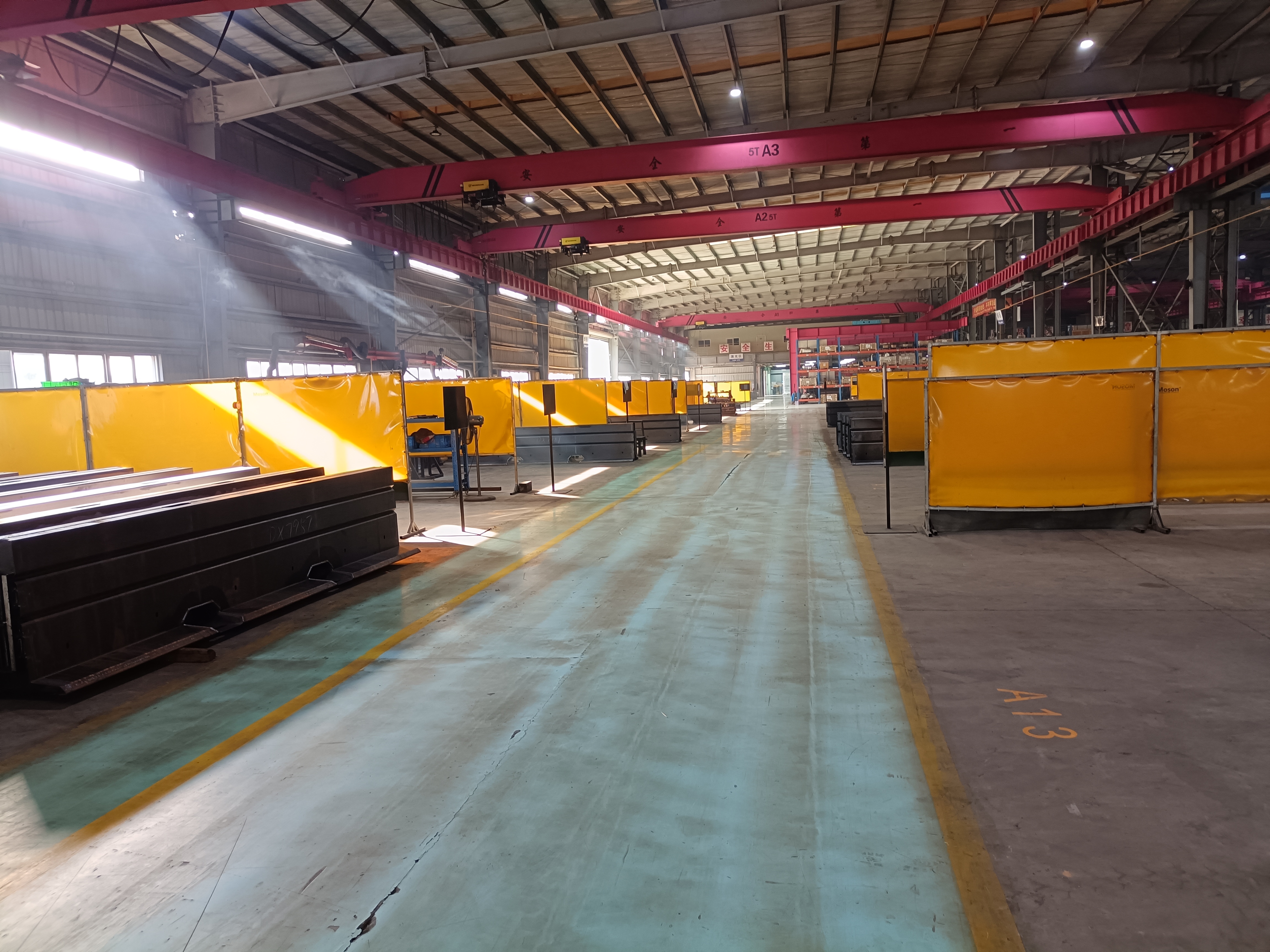
Openex's supplied image captioned Welding cells in Xiamen Openex fabrication shop supports a welding-capability discussion, but the RFQ should still tie the image to the quoted site and part.
Workshop videos should be short and continuous. A useful clip starts with a dated whiteboard, system screen, or other time reference, then shows the machine, the tooling, the in-process part, and the inspection step without cuts. The buyer should ask who filmed it, at which site, and on what date. A polished brand video is not a substitute for a process clip, and a process clip is not a substitute for an audit.
Openex's image set includes captions for a fabrication shop near Xiamen Port, a sheet metal fabrication shop near Shanghai Port, a press brake machine near Xiamen Port, a large CNC machining center near Shanghai Port, and a 250-ton overhead crane near Shanghai. These captions are the right level of specificity. A buyer can use them to build a site-and-process map, then request current photos or a live video call for the exact project.
Certificates: what to check beyond the logo
A certificate should be read as a record with a holder, a standard, a scope, a site, and a validity period. The table below uses Openex's supplied certificate records to show the fields a buyer should capture. The point is not to accept a certificate because it is displayed on a website; the point is to match the record to the project.
| Certificate | Record and scope | Validity note for a buyer |
|---|---|---|
| ISO 9001 | Certificate 11426Q01049R001, issued by Beijing East Allreach Cerficiation Center Co., Ltd., to GB/T 19001-2016/ISO 9001:2015. Scope: manufacture of machined parts, metal structures and sheet metal components (except where a license is required). | Issued 2026-04-16 and expires 2029-04-15. Check that the quoted site and part family fall within the stated scope. |
| ISO 14001 | Certificate 11426E00739R001, issued by Beijing East Allreach Cerficiation Center Co., Ltd., to GB/T24001-2016 / ISO 14001:2015. Scope: manufacture of machined parts, metal structures and sheet metal components (except where a license is required). | Issued 2026-04-16 and expires 2029-04-15. This is an environmental management-system record, not a product performance certificate. |
| ISO 45001 | Certificate 11426S00656R001, issued by Beijing East Allreach Cerficiation Center Co., Ltd., to GB/T 45001-2020 / ISO 45001:2018. Scope: manufacture of machined parts, metal structures and sheet metal components (except where a license is required). | Issued 2026-04-16 and expires 2029-04-15. This is an occupational health and safety management-system record. |
| ISO 3834-2 | Certificate 23/999-3834, issued by SGS. Scope: fusion welding of metallic material (welding process 135,135-Auto; material groups 1.1,1.2). | Issued 2024-10-15 and expires 2026-10-04. A buyer reviewing this record after 2026-10-04 should request current renewal evidence before relying on it as valid. |
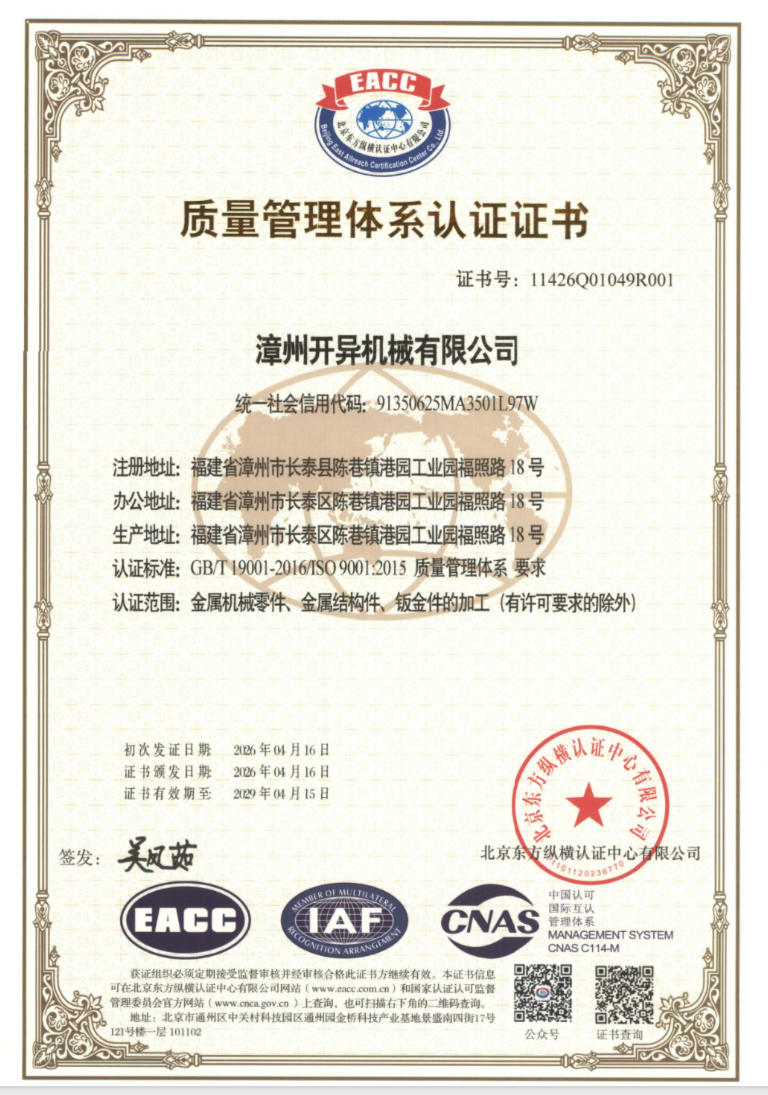
The certificate image is a proof document only when the number, scope, issuer and dates are checked against the current original.
Two limits apply. A management-system certificate is not a product approval, and a welding certificate is not a qualification for every weld procedure. For a project with pressure, structural, or safety-critical welds, ask for the applicable WPS, PQR, welder qualification, and inspection report. Openex's capability record lists welding procedure qualification, NDT methods RT, UT, MT, PT, VT and LT, destructive testing, dimensional inspection, and surface roughness checks. Those are the records to request at part level.
Drawing formats and revision control
Drawing control is where many documentation packs are weakest. The buyer should require a written list of accepted file types before award, not after the first article fails. Openex's product records state that parameters can be customized per client for dimensions, tolerances, materials, surface and heat treatments, and several records describe fabrication as per drawings. Those statements define customization capability, not file-format control. The RFQ response should name the accepted 2D and 3D formats, the preferred units, the title-block requirements, and the revision rule.
A practical drawing package has four layers. The first is the controlled 2D drawing with dimensions, tolerances, material, surface finish, heat treatment, and quantity. The second is the 3D model or neutral geometry file used for programming and verification. The third is the revision record that shows which file is released for production. The fourth is the approval record that shows the buyer accepted the drawing before cutting began. If a supplier cannot state these four layers in writing, the buyer should treat the drawing exchange as uncontrolled.
For global projects, add three checks. Confirm the unit system, because a US project may use inches while a Japanese or Dutch project may use millimeters. Confirm the tolerance standard and whether the drawing uses general tolerances or part-specific tolerances. Confirm the language and the title-block fields that must be completed, such as material grade, surface treatment, inspection level, and marking. Openex's product records include examples where the drawing must carry a material grade, a load, a surface treatment, or a dimensional tolerance, such as the JFE-1 steel chassis with approximately 15 x 2.5 x 2.1 m dimensions and a 35-ton maximum load, or the Custom-L-1 box section with 8,000 mm length and straightness of 3.0 mm or less per 10,000 mm.
MOQ, lead time and sample approval before mass production
MOQ is process-specific. Openex's supplied capability records show different commercial terms by process block: one block lists an MOQ of 1 unit, a monthly capacity of 1,000 pcs, and a 3-day lead time; the welding block lists 25 tons and 30-45 days; the machining block lists 15 tons and 30-45 days; the surface-treatment block lists 15 tons and 45 days. A buyer should not take one number as the company-wide MOQ. Ask for the MOQ, setup charge, and lead time for the exact process route and part family.
Sample approval should be a documented gate, not an informal email. The sample plan should state whether the sample is a prototype, a first article, or a pre-production sample; how many pieces will be supplied; which material lot and drawing revision apply; which dimensions and tests will be reported; who approves; and what happens if the sample fails. Openex's application record lists prototyping among supported project types, and its machining capability lists prototype development and 100% inspection among special options. Those facts support a sample discussion, but they do not create a free-sample promise or a fixed sample lead time.
Before mass production, require a first-article report that matches the drawing revision and the approved sample. For welded parts, include the WPS/PQR reference and the inspection method. For machined or formed parts, include dimensional results and surface roughness where specified. For coated parts, include coating thickness or appearance criteria where specified. The approval record should release a named quantity, not an open-ended production run.
Step-by-step pre-award documentation workflow
- Define the part family and process route. List the materials, thickness range, forming, welding, machining, surface treatment, and inspection steps. Use the drawing and the 3D model together.
- Verify the legal entity and production site. Match the company name, invoice address, production address, and certificate holder. Ask which site will run each process.
- Request factory proof. Ask for current photos and a short continuous video of the quoted machine, the in-process part, and the inspection area. Record the site and date.
- Map certificates to scope. Capture certificate number, issuer, standard, scope, site, issue date and expiry date. Check the ISO 3834 record for current validity if welding is in scope.
- Lock drawing formats and revision control. Confirm accepted 2D and 3D file types, units, title-block fields, revision rule, and the approval contact.
- Agree the inspection and test plan. State sampling or 100% inspection, report format, third-party witness points, and nonconformance handling.
- Settle MOQ, lead time and sample approval. Use the process-specific MOQ, not a company-level number. Define the sample type, tests, approval criteria, and release rule.
- Issue a document register with the purchase order. List every controlled document, its revision, its owner, and its due date. Make the register part of the award package.
This workflow does not replace a supplier audit. It creates a traceable file that makes an audit more efficient and gives the buyer a clear basis for comparing suppliers.
Documentation evidence: what it proves and what it does not
| Evidence item | What it can prove | What it does not prove |
|---|---|---|
| Legal entity record | Who is contracting and where notices go | That the entity owns the factory or runs the quoted process |
| Production-site statement | Where the parts will be made | Capacity, quality, or certificate coverage by itself |
| Factory photo or video | That a machine or workshop exists at a point in time | Current capability, capacity, or part conformance |
| Management-system certificate | That a named scope is certified | Product approval or every process within the scope |
| WPS/PQR and welder qualification | That a welding procedure is documented for a defined scope | That every production weld is compliant |
| Drawing revision record | Which file is released for production | That the part has been manufactured correctly |
| First-article report | That the sample met the stated checks | That mass production will be identical without process control |
Use cases: US, Japan, Netherlands and ESS projects
US modular housing. Openex's case record for a US modular prefabricated housing manufacturer lists 82 units of beams, columns, and hinges for foldable houses, a 70-year duration, and four years of stable operation. The same case includes high-strength stainless steel pins in 17-4 PH H900 SS with Rm more than 1310 MPa (190 ksi). For this project, the drawing pack must state the material grade, mechanical property, hole fit, hinge position, and coating, not only the assembly shape.
Japan steel mill logistics. The JFE-1 steel chassis record lists a weight of 10 tons, approximate dimensions of 15 x 2.5 x 2.1 m, a maximum load of 35 tons, and carbon steel material. The case record lists 30 units for a Japanese steel mill and stable operation for 20 years. A drawing pack for this part should define the load case, the V-top geometry, the wooden cushion interface, the surface protection, and the inspection points for a large welded chassis.
Netherlands AGV chassis. Openex's case record for a large AGV manufacturer in the Netherlands lists 345 units of custom steel chassis for container or LNG-tank handling, a duration of over 30 years, and stable operation for more than four years. The documentation should tie the chassis drawing to the welding procedure, dimensional control, coating, and interface points that the AGV builder will use during assembly.
ESS cabinets. The case record for an energy storage system developer lists 1,500 liquid-cooling cabinets and three years of operation. The Customized-J-05 cabinet record lists material thickness of 1.5-5.0 mm, protection ratings of IP54, IP55 or IP65, and powder coating or anti-corrosion coating. For this part family, the drawing and inspection plan should state the enclosure dimensions, door and panel fit, gasket or sealing requirement, coating system, and protection-rating verification method.
Limitations and buyer boundaries
Documentation reduces uncertainty, but it does not remove it. A factory photo is a point-in-time record, not an audit. A management-system certificate covers the scope and site named on the certificate, not every product or process. The ISO 3834 record in the Openex material expires on 2026-10-04, so a buyer reviewing it after that date should request current renewal evidence. MOQ and lead time vary by process block, and a sample approval does not guarantee that mass production will be identical unless the process controls and inspection plan are maintained.
The buyer should also avoid two mistakes. Do not accept a certificate as a substitute for a part-level inspection report. Do not accept a factory video as a substitute for a drawing revision record. The strongest pre-award file combines company identity, site proof, certificate scope, drawing control, inspection planning, and sample approval in one traceable package.
FAQ
ISO 9001 certified sheet metal fabrication manufacturers Chinese
For Chinese sheet metal fabrication manufacturers, an ISO 9001 certificate should be checked by number, issuer, scope, standard, and validity dates, not by the logo alone. Openex's ISO 9001 record is certificate 11426Q01049R001, issued by Beijing East Allreach Cerficiation Center Co., Ltd., to GB/T 19001-2016/ISO 9001:2015, with scope manufacture of machined parts, metal structures and sheet metal components (except where a license is required), issued 2026-04-16 and expiring 2029-04-15. The certificate supports the management-system claim for the stated scope; it does not by itself prove that every drawing, material, or special process in a project is covered. Buyers can request the current certificate copy and a scope confirmation with the RFQ.
Conclusion
For global sheet metal fabrication, documentation is the control layer between a quotation and a production order. A buyer should be able to trace the legal entity, the production site, the process route, the certificate scope, the drawing revision, the inspection plan, the MOQ, and the sample approval without relying on verbal assurances. Openex's records provide concrete examples for that file, including two manufacturing premises near Xiamen Port and Shanghai Port, ISO 9001, ISO 14001, ISO 45001 and ISO 3834 records, process-specific MOQ terms, and cases in the US, Japan, the Netherlands and energy storage.
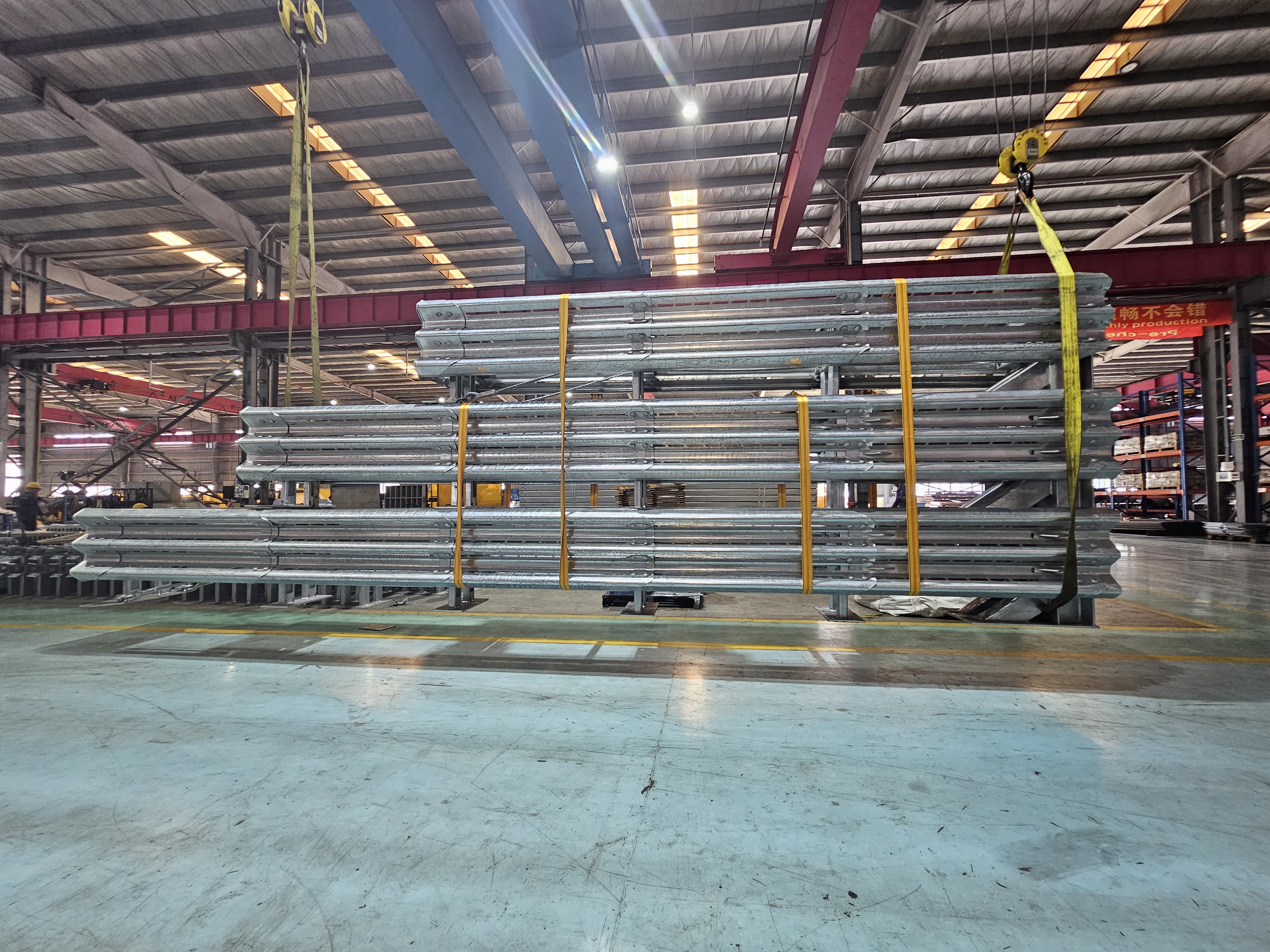
Pre-award review can include assembling capability, not only cutting and bending.
For the current capability and contact details, download the Openex mechanical brochure (PDF) and use it with the project-specific document register described above. The brochure supports a first review; the award decision should still rest on the drawing, certificate, inspection and sample records for the exact part.
Have Questions or Need More Details?
Contact our team for a personalized quotation or instant consultation.
Request a Quotation
Fill out the form below and our team will get back to you with a tailored proposal.
WhatsApp Direct Chat
Prefer to chat in real-time? Message us on WhatsApp for instant assistance & quick answers.
- Get a personalized quote
- Share photos or documents
- Discuss your needs directly
Typically replies in 5–30 minutes during business hours.