
Single-Cylinder vs Multi-Cylinder Hydraulic Cone Crusher Components: A Fabrication Comparison
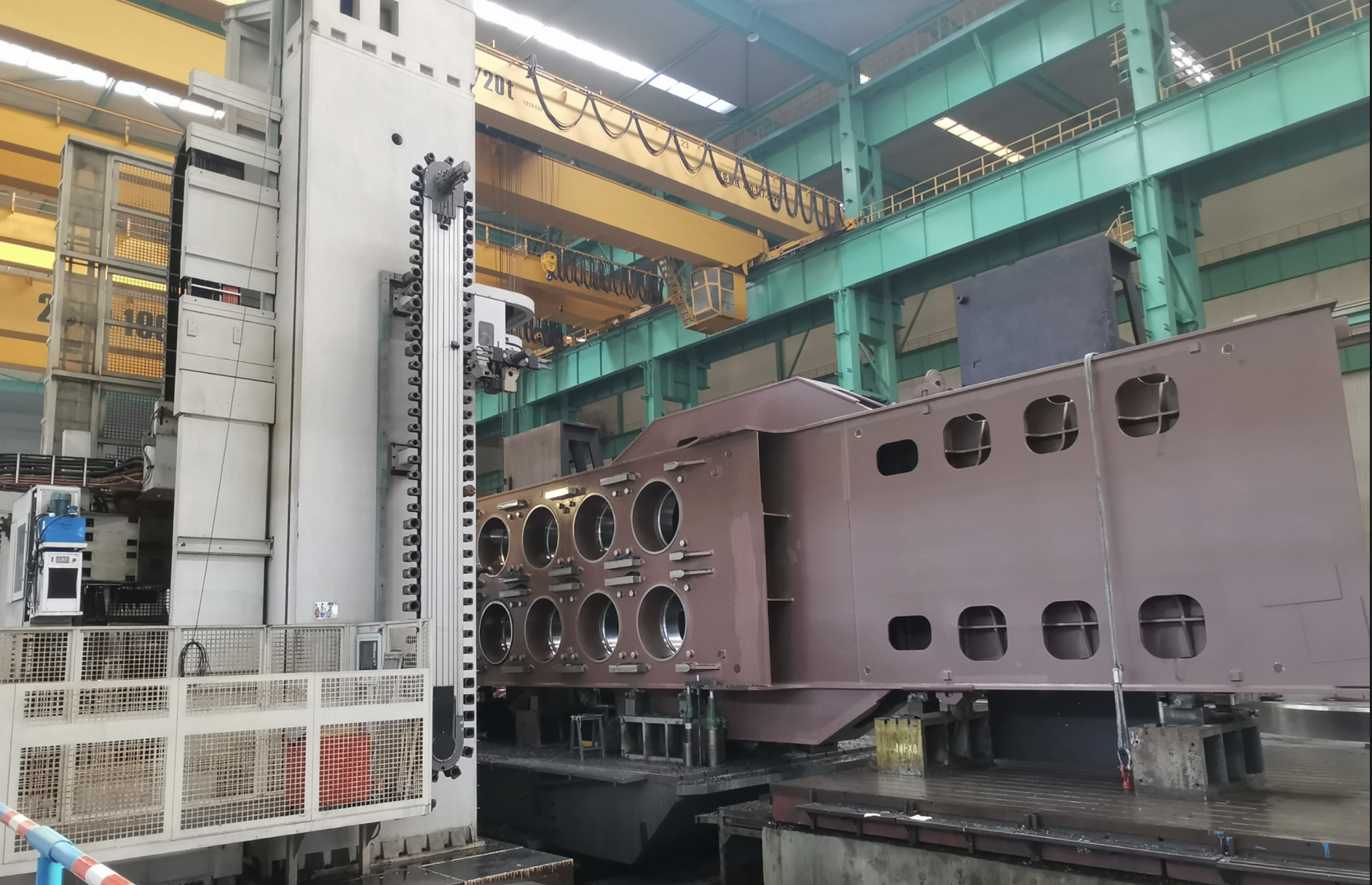
Large machining capacity matters when crusher bases and platens must be finished after casting or welding. Image: Openex fabrication.
Choosing between single-cylinder and multi-cylinder hydraulic cone crusher components is a fabrication decision as much as a crusher-configuration decision. The cylinder count changes how hydraulic force is arranged and how many mounting interfaces, flanges, pins, and pipe connections the component set may need. Those changes affect whether a heavy machine base is better cast, welded, or produced as a hybrid, and what must be machined on a large machined platen or base. For a buyer at the Decision stage, the reliable route is to lock the crusher configuration, convert it into a drawing-level component list, and then compare casting and welded fabrication against the required machining and acceptance evidence.
Openex fabrication (Xiamen Openex Mechanical Technology Ltd) is a custom metal fabrication and machining supplier founded in 2009, with two manufacturing premises near Xiamen Port and Shanghai Port, 30,000 m² of factory space, 200 employees, 20,000 tons of annual output, 35 engineers, and an 80% export share. Its listed processes include casting, forging, machining, welding, and surface finishing. Those capabilities are relevant to crusher component sourcing, but the exact material grade, process route, machine envelope, and inspection plan still need to be confirmed against the crusher drawing. The company website is Xiamen Openex Mechanical Technology Ltd.
Why crusher component sourcing gets confusing at the decision stage
The confusion usually starts when a buyer compares quotes for what looks like the same item. One supplier may quote a casting with pattern cost, machining allowance, and casting inspection. Another may quote a welded assembly made from steel plate, with welding procedure qualification, distortion control, and post-weld machining. Both can be valid, but they are not the same manufacturing route. A third supplier may quote only machining and assume the buyer will supply the casting or weldment.
Single-cylinder and multi-cylinder configurations add another layer. For a multi-cylinder hydraulic cone crusher and components, the design normally distributes hydraulic force through several cylinders around the main shaft. That can increase the number of mounting flanges, pin locations, hydraulic connections, and local stiffening details that must be fabricated and machined. A single-cylinder design normally concentrates the hydraulic function in a central cylinder and may reduce some external cylinder interfaces, but it does not remove the need for a heavy frame, base, and accurately machined load surfaces. The actual part list depends on the crusher design, so the buyer should use these as checklist prompts, not as a substitute for the drawing.
- Configuration question: How many hydraulic cylinders, mounting interfaces, and pipe connections does the design require?
- Process question: Is each heavy part a casting, a welded fabrication, a forging, or a hybrid?
- Machining question: Which surfaces, holes, and interfaces must be finished after the main process?
- Acceptance question: What evidence proves material, weld or casting quality, dimensions, and assembly fit?
What the fabrication market context means for crusher component buyers
Metal fabrication is a broad supply base, and not every fabricator is set up for heavy crusher components. Strategic Market Research reported the global fabricated metal products market at USD 2.35 trillion in 2024. That scale includes many small sheet metal shops and many heavy fabrication suppliers, but the capabilities are not interchangeable. A supplier that is strong in stainless steel fabrication or thin aluminum fabrication may not be the right source for a large metal fabrication project that needs a heavy machine base, a large machined platen, and casting or welding documentation.
The practical split is between custom metal fabrication and heavy metal fabrication. Custom metal fabrication covers steel chassis, steel frame, steel skid, guards, brackets, and prefabricated steel components. Heavy metal fabrication covers thick steel plate fabrication, large welded structures, structural steel beams, steel angles, steel channels, and heavy weldments. Casting, forging, and machining sit alongside those routes. A crusher component package can include all of them, so the buyer should qualify the process route rather than only the supplier name.
Openex fabrication operates two premises near major ports, which is relevant for export projects that need steel fabrication, metal fabrication and welding, surface finishing, and assembly before shipment. The company lists casting, forging, machining, welding, and surface finishing, so it can be evaluated for hybrid packages where a cast base, a welded frame, and a machined platen must meet one drawing set. The buyer should still confirm which process is proposed for each part and which inspection records will be supplied.
A practical fabrication decision framework for single- and multi-cylinder crusher components
The framework below keeps the crusher configuration and the manufacturing route separate. That separation prevents a common error: choosing a supplier because it can make one large weldment, then discovering that the casting, machining, or acceptance scope was never covered.
Step 1: Lock the configuration and the load path
Start with the crusher arrangement. For a single-cylinder configuration, identify the central hydraulic cylinder, the main frame, the adjustment and locking features, and the base. For a multi-cylinder configuration, identify each cylinder mounting position, flange, pin, hydraulic manifold, and pipe route. Mark which parts carry primary crushing loads and which are guards, covers, or brackets. This load-path map decides where casting may be justified, where welded fabrication is more practical, and where machining tolerances are critical.
Step 2: Convert the crusher bill of materials into a manufacturing bill of materials
A crusher bill of materials lists parts. A manufacturing bill of materials lists the process route for each part. For each item, record material, starting form, process, machining allowance, heat treatment, surface treatment, inspection, and assembly stage. A heavy machine base may start as a steel casting or a welded steel plate structure. A large machined platen may start as a casting, a forged block, or a flame-cut plate. A pin or shaft may be forged and then machined. The manufacturing bill of materials is the document that makes quotes comparable.
Step 3: Decide the casting route for each heavy part
Casting (iron/steel) is often considered when the part has complex ribs, internal passages, curved load paths, or a repeat quantity that can justify pattern tooling. Casting can reduce the number of welded joints in a complex frame and can provide a stable shape for subsequent machining. The trade-offs are pattern cost, casting defect risk, longer process planning, and the need for casting inspection. Buyers should confirm the exact iron or steel grade, pattern ownership, casting method, machining allowance, non-destructive examination, and repair approval rules.
Aluminum casting is a different route. It can be relevant for non-load-bearing covers, guards, or weight-sensitive ancillary parts, but it should not be assumed for a heavy crusher base or a large machined platen without a drawing that specifies the alloy, load case, and acceptance criteria. Aluminum fabrication and aluminum casting have their place in crusher ancillary equipment, but the heavy load path usually points to steel or iron unless the design explicitly says otherwise.
Step 4: Decide the welded fabrication route for each heavy part
Welding fabrication is often practical for large, one-off, or low-volume heavy parts because it avoids pattern tooling and allows design changes before final machining. Steel plate fabrication can produce a heavy machine base, a steel frame, a steel skid, or a crusher support structure. The trade-offs are weld distortion, fatigue detail design, weld access, and the need for qualified welding procedures. Buyers should confirm the welding procedure specification, procedure qualification record, welder qualification, joint preparation, preheat, interpass control, post-weld heat treatment if required, and non-destructive examination.
Stainless steel fabrication needs separate attention because distortion and contamination control differ from carbon steel work. Galvanized steel fabrication is useful for support structures and guards, but welding after galvanizing requires repair of the zinc coating and a clear sequence. For any welded crusher component, the drawing should show weld symbols, critical weld locations, machining allowance, and the surfaces that must be finished after welding. The buyer should also confirm whether the fabricator will machine after welding or before, because that choice affects distortion and final alignment.
Step 5: Plan machining for the heavy machine base and large machined platen
Machining is where many crusher component quotes become incomparable. A heavy machine base may need large CNC boring, milling, drilling, and tapping on multiple faces. A large machined platen may need flatness, parallelism, thickness control, hole position, bolt pattern, and hydraulic interface accuracy. The supplier must have a machine envelope and table capacity that fit the part, not just a general claim of large machining. The buyer should ask for the proposed machine, maximum table load, travel, setup plan, reference datum, and inspection method.
Openex fabrication lists large CNC machining among its manufacturing capabilities. For a specific crusher base or platen, the buyer should still confirm the exact machine envelope, maximum table load, lifting plan, and measurement method. Heavy lifting is part of the same check. Openex lists an overhead crane capacity of 250 tons at its heavy fabrication premise, which is relevant for handling large weldments and castings during machining and assembly, but the lifting plan must still match the part and the route.
Step 6: Freeze the drawing package before quotation
A quotation is only useful when the drawing package is complete. For crusher components, the package should include the assembly drawing, detail drawings, material specification, casting or welding requirements, machining allowance, heat treatment, surface treatment, tolerance stack-up, hydraulic interface details, lifting points, marking, and inspection plan. If the drawing says cast steel but the supplier quotes a weldment, the quote is not equivalent. If the drawing says machined after welding but the supplier plans to machine before welding, the acceptance risk changes.
Step 7: Define acceptance before production starts
Acceptance should be written before the first cut. For a casting, that may include material certificate, chemical composition, mechanical properties, dimensional report, and non-destructive examination. For a welded fabrication, it may include mill certificates, welding procedure and welder qualification, weld inspection, dimensional report, and post-weld heat treatment records. For a machined base or platen, it may include a dimensional report, flatness and parallelism records, hole position records, and assembly trial results. For hydraulic interfaces, the buyer should confirm whether pressure testing or leak testing is required.
Openex fabrication's risk-control measures include steel mill certificates for incoming material, in-house tensile testing for mechanical properties, and inspection reports with material traceability. For galvanized parts, coating thickness should be checked with a film thickness tester. These checks are useful only when the drawing and acceptance plan define the required values and records.
Step-by-step: from crusher drawing to accepted component
- Receive the crusher configuration package. Confirm whether the project is single-cylinder or multi-cylinder, and mark the hydraulic cylinder interfaces, mounting flanges, pins, and pipe routes.
- Classify each component by load and process. Separate primary load-path parts from guards and brackets. Mark candidate castings, weldments, forgings, and machined parts.
- Request a manufacturing route for each critical part. Require the supplier to state the starting form, process sequence, machining allowance, heat treatment, surface treatment, and inspection.
- Check the machine envelope and handling plan. Confirm that the proposed CNC machine, table load, crane, and lifting points can handle the heavy machine base or large machined platen.
- Review the drawing for manufacturing details. Check casting grade, weld symbols, joint access, machining datums, tolerance stack-up, hydraulic interface dimensions, and lifting points.
- Approve the inspection plan. Agree on material certificates, non-destructive examination, dimensional reports, coating checks, and assembly trial before production.
- Release production and hold the acceptance gate. Do not ship until the agreed records, marking, packing, and traceability are complete.
Use cases where the casting-versus-fabrication choice changes
New multi-cylinder crusher module for an aggregate plant
A new multi-cylinder hydraulic cone crusher and components package may include several cylinder mounting flanges, local stiffening plates, hydraulic pipe brackets, and a heavy base. If the design has repeated mounting details, casting may be evaluated for complex frame sections, while welded fabrication may be evaluated for the large base and support structure. The buyer should confirm that the fabricator can machine the mounting faces after welding and can provide dimensional evidence for the cylinder interfaces. A supplier that can handle only sheet metal fabrication is not a match for this scope.
Single-cylinder crusher base replacement or overhaul
For a single-cylinder crusher overhaul, the buyer may need one heavy base, a platen, or a repair weldment rather than a full set of new components. Welded fabrication can be practical for a one-off base because it avoids pattern lead time, but the machining plan becomes decisive. The buyer should confirm the existing interface dimensions, the allowable weld repair procedure, and the post-machining alignment. If the original part was a casting, a welded replacement should be reviewed as an engineering change, not treated as a drop-in substitute without drawing approval.
Export project with structural steel and documentation requirements
An export project may combine crusher components with structural steel, prefabricated steel components, steel beams, steel angles, steel channels, steel skids, and galvanized steel fabrication for supports. The documentation package becomes part of the product. Buyers should confirm material traceability, inspection reports, surface treatment records, packing, and marking. If the scope also includes pressure vessels, pressure tanks, tube sheets, or tube plates, those items need their own compliance and inspection requirements; they should not be bundled into a general fabrication quote without separate review.
Comparison tables: configuration differences and process-route differences
The first table compares the component focus of single-cylinder and multi-cylinder configurations. The second compares casting and welded fabrication for heavy bases and platens. Both are decision checklists, not specifications. The actual part list and process route must come from the crusher drawing.
| Decision area | Single-cylinder configuration | Multi-cylinder configuration | What the buyer should confirm |
|---|---|---|---|
| Hydraulic force layout | Hydraulic function is concentrated in a central cylinder arrangement. | Hydraulic force is distributed through several cylinders around the main shaft. | Load path, cylinder mounting, and local reinforcement details. |
| Mounting interfaces | May involve fewer external cylinder interfaces. | Normally involves more flanges, pins, and hydraulic connections. | Hole patterns, pin fits, flange flatness, and machining access. |
| Heavy machine base | Still requires a heavy base and stable load path. | May require additional local stiffening around cylinder mounts. | Whether the base is cast, welded, or hybrid, and how it will be machined. |
| Large machined platen | Critical flatness and hole position remain essential. | More machined pads or interfaces may be required. | Flatness, parallelism, thickness, datum scheme, and inspection method. |
| Piping and manifold | Often more centralized routing. | More connections and routing points to verify. | Pressure test, leak test, and assembly clearance. |
| Maintenance access | Access is organized around the central cylinder. | Access must consider multiple cylinders and connections. | Removable guards, lifting points, and service clearance. |
Table 1: Configuration prompts for crusher component fabrication. Actual part count and interface design depend on the crusher model and drawing.
| Criterion | Casting route | Welded fabrication route | Buyer confirmation |
|---|---|---|---|
| Geometry | Suits complex ribs, internal passages, and curved load paths. | Suits large plate structures and designs that can be built from weldable sections. | Which geometry features drive the choice, and whether a hybrid is allowed. |
| Tooling and batch | Pattern and tooling cost are easier to justify with repeat quantity. | Lower tooling burden for one-off or low-volume parts. | Batch size, pattern ownership, and change-order rules. |
| Material route | Casting (iron/steel) is common for heavy load-path parts; aluminum casting is separate. | Steel plate fabrication with steel grade and weldability confirmed. | Exact grade, alloy, certificate, and welding procedure. |
| Defect risk | Shrinkage, porosity, and inclusion risks require casting inspection. | Porosity, lack of fusion, distortion, and weld defect risks require welding inspection. | Non-destructive examination method, extent, and acceptance standard. |
| Machining | Machining allowance and datum must be defined on the casting. | Machining may follow welding and stress relief; distortion must be controlled. | Machine envelope, setup, flatness, hole position, and final inspection. |
| Repair | Repair welding or filling usually needs approval. | Repair may be possible with an approved welding procedure. | Repair limits, approval authority, and records. |
| Documentation | Casting certificate, material test, dimensional report, and examination records. | Mill certificates, welding procedure, welder qualification, examination, and dimensional report. | Document list, traceability, and release gate. |
Table 2: Casting versus welded fabrication for heavy crusher bases and platens. This table does not replace a project-specific process review.
FAQ
What should a crusher component drawing package include before quotation?
A complete package should include the assembly and detail drawings, material specification, casting or welding requirements, machining allowance, heat treatment, surface treatment, tolerance stack-up, hydraulic interface details, lifting points, marking, and inspection plan. For a multi-cylinder crusher component set, the drawing should also identify each cylinder mounting interface, flange, pin, and pipe route. If these details are missing, suppliers will fill the gap with assumptions, and the quotes will not be comparable.
How do you choose between casting and welded fabrication for a heavy crusher base?
Choose casting when the geometry is complex, the quantity can justify tooling, and the design benefits from a monolithic shape with fewer welded joints. Choose welded fabrication when the part is large, one-off, or likely to change before final machining, and when the fabricator can control distortion and machine after welding. In both cases, confirm the material grade, inspection method, machining allowance, and repair rules. The lower quote is not automatically the lower-risk route.
Why can two quotes for the same crusher component differ so much?
Quotes often differ because the suppliers are quoting different manufacturing routes, not different prices for the same route. One may include pattern cost, casting inspection, and machining allowance. Another may quote a weldment with welding procedure qualification, stress relief, and post-weld machining. A third may quote machining only. The buyer should compare the manufacturing bill of materials, inspection plan, and exclusions line by line before comparing price.
What should be inspected before accepting a large machined platen?
Confirm the material certificate, dimensional report, flatness and parallelism records, thickness measurements, hole position, bolt pattern, surface finish, and any hydraulic interface dimensions. Check that the datum scheme in the inspection report matches the drawing. If the platen was welded before machining, review the weld inspection and stress-relief records. If it was cast, review the casting inspection and repair records. Acceptance should be based on the agreed plan, not on a visual check alone.
Which metal fabrication manufacturer is better for custom industrial projects?
The better manufacturer is the one that can match your drawing to a documented process route and prove it at acceptance. For custom industrial projects, compare process breadth, heavy-part handling, large machining envelope, engineering support, inspection and traceability, and export documentation. Openex fabrication lists 30,000 m² of factory space, 200 employees, 20,000 tons of annual output, 35 engineers, two premises near Xiamen and Shanghai, and an 80% export share. It lists casting, forging, machining, welding, and surface finishing. Those capabilities make it a candidate for large custom crusher component work, but they do not replace project-specific confirmation of material grade, machine envelope, non-destructive examination, and schedule. For a project review, share the crusher component drawings with Openex fabrication and ask for a manufacturing route, inspection plan, and quotation basis before comparing suppliers.
Conclusion: decide the route before you compare the price
Single-cylinder and multi-cylinder hydraulic cone crusher components should be compared at the drawing and process-route level. The cylinder count changes the number and type of hydraulic interfaces, which in turn changes the casting, welding, machining, and inspection work on the heavy machine base and large machined platen. A casting route can be the right choice for complex, repeatable heavy parts. A welded fabrication route can be the right choice for large, one-off, or design-evolving parts. The buyer's job is to make that choice explicit, freeze the drawing package, and define acceptance before production.
Openex fabrication is positioned for custom metal fabrication and machining projects that combine casting, forging, welding, machining, and surface finishing. Buyers should verify the proposed process route, machine envelope, lifting plan, inspection records, and delivery schedule against the actual crusher drawing. That evidence-based comparison is more useful than a supplier label or a headline capacity claim.
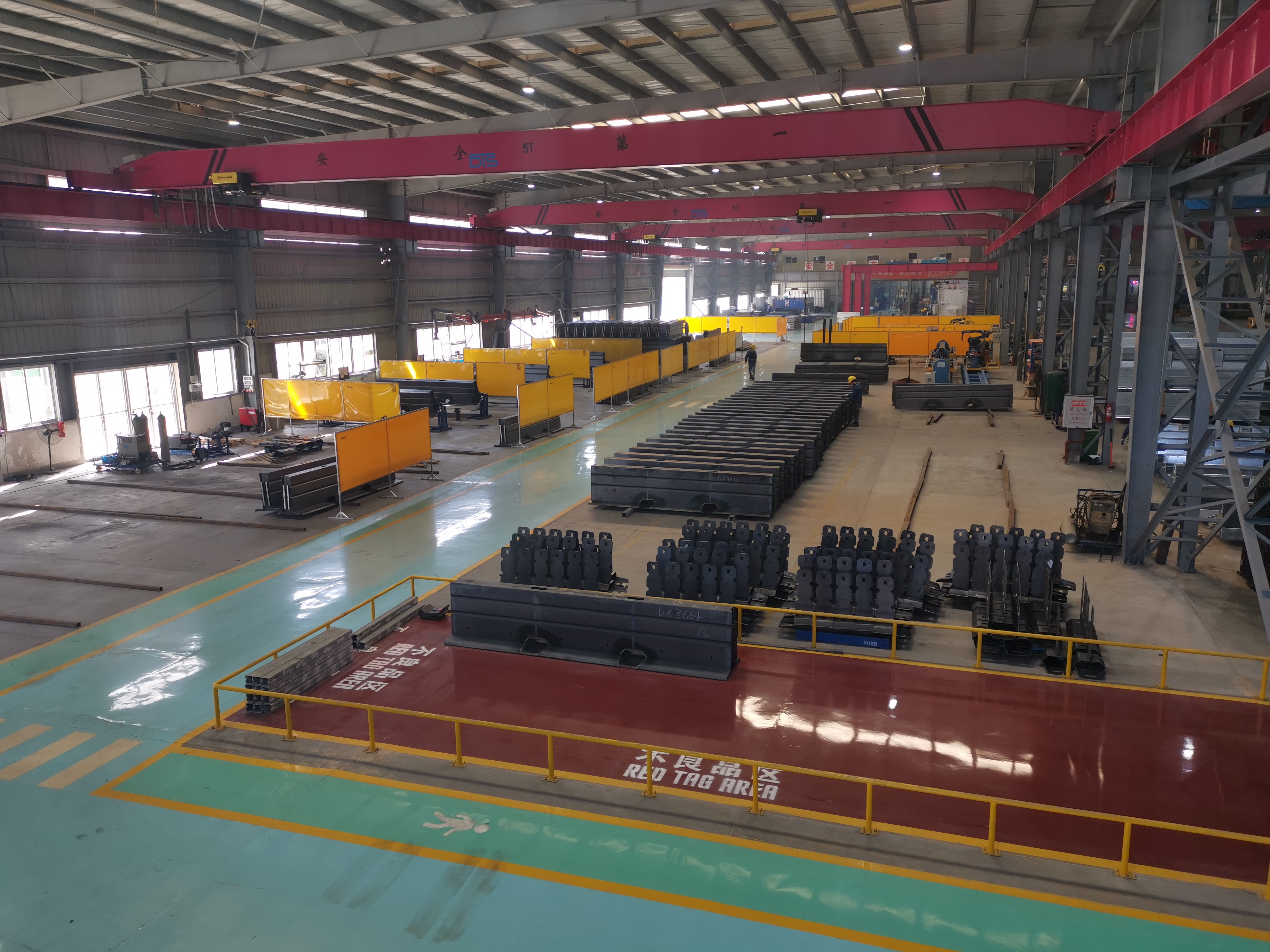
Factory capability review is part of supplier qualification for heavy crusher components. Image: Openex fabrication.
Have Questions or Need More Details?
Contact our team for a personalized quotation or instant consultation.
Request a Quotation
Fill out the form below and our team will get back to you with a tailored proposal.
WhatsApp Direct Chat
Prefer to chat in real-time? Message us on WhatsApp for instant assistance & quick answers.
- Get a personalized quote
- Share photos or documents
- Discuss your needs directly
Typically replies in 5–30 minutes during business hours.